
T-shirts make one of the most impactful and cost-effective promotional products. They provide long-term branding opportunities and help increase your logo visibility each time your customers wear them. However, if your logo or design is not printed on them using the right method, it may fade quickly, lose its appeal, and fail to create the desired impression.
For this particular reason, businesses are often searching for the best types of t-shirt printing methods.
Out of all the different types of shirt printing methods available, choosing the right one depends on your specific requirements. This can vary from fabric type and design complexity to quantity of your print run, and your budget. Moreover, you must keep in mind that all the different types of t-shirt printing methods come with their own set of advantages and challenges which you must keep in consideration for your custom apparel projects.
To help you out, we have compiled 8 different types of shirt printing methods that are considered the best in printing industry. Read the blog and find some interesting details on how does each type of shirt printing method works and which type of project is it best for.
Shirt printing is one of the fastest-growing businesses today because of the increasing demand for personalized clothing like custom tees. There are different types of printing on shirts that businesses usually opt for, considering their specific requirements.
Listed below are the 8 different types of shirt printing methods that you may consider for your custom project.
- Screen printing
- Direct to garment printing
- Sublimation printing
- Plastisol transfers
- Heat transfer vinyl printing
- Embroidery
- Discharge printing
- Airbrushing

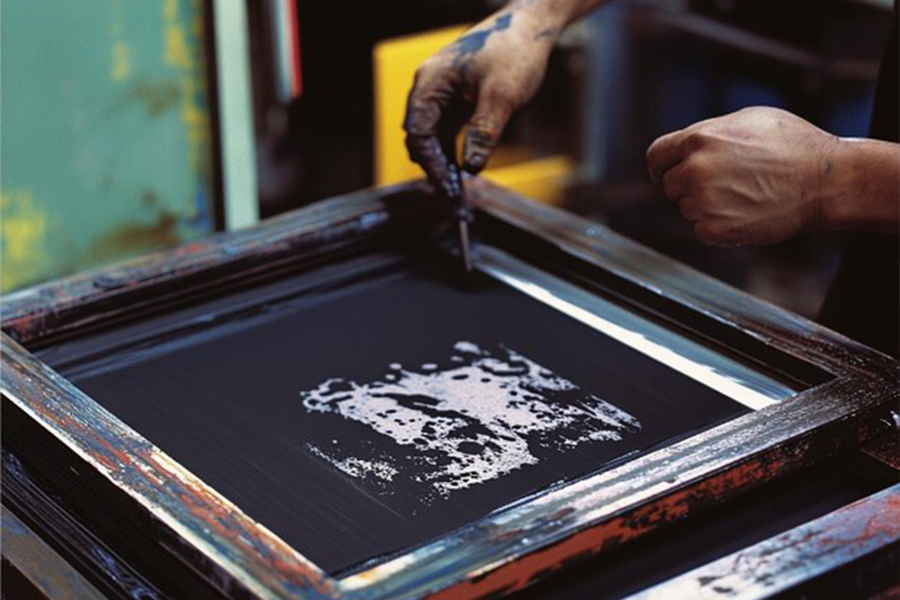
Screen printing, also known as silkscreen printing is one of the most popular and t shirt printing types. This method involves printing of designs onto the t-shirt by pressing inks through a mesh screen stencil. These inks are specifically made for screen printing, and results in long-lasting and vibrant prints. Screen printing is excellent for producing custom workwear uniforms, promotional items, or event merchandise. However, this shirt printing method is not suitable for designs with lots of details and multiple colors.
Benefits:
➣ Screen printing is cost-effective for large print runs of hundreds or thousands of t-shirts
➣ Results in durable, and long-lasting designs that can easily withstand 50 to 100 washes without fading
➣ Effective for producing vibrant designs with fewer colors
➣ It can be done on a variety of fabrics, including cotton, cotton blends, silk, wool and even polyester
Challenges:
➣ It is not suitable for intricate designs or high-resolution images
➣ Screen printing requires significant set-up time for stencil and screens
➣ Set-up cost for screen printing can be relatively high
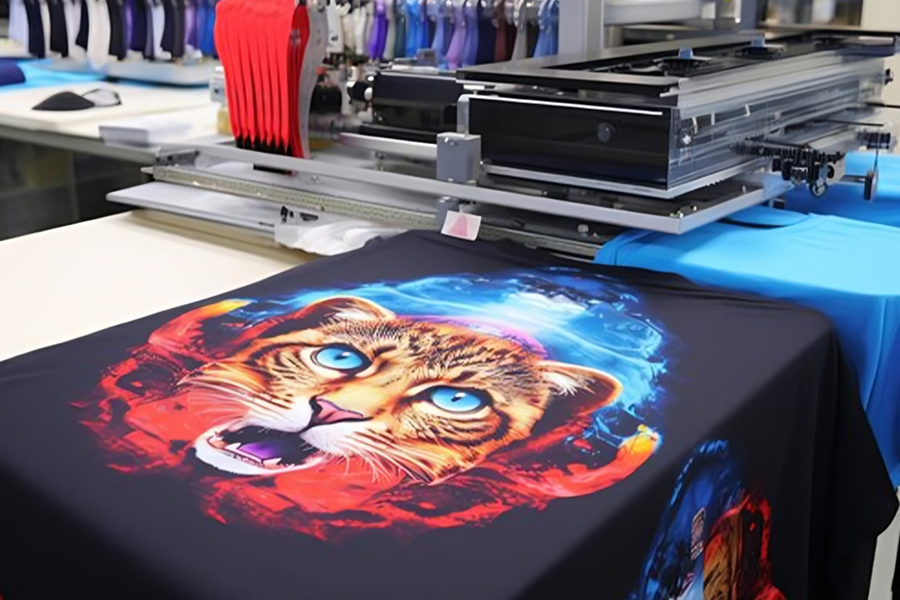
There are different ways to print on shirts, and direct to garment printing is another popular method among them after screen printing. In DTG printing, an inkjet printer is used to print the artwork directly on to the t-shirt. It results in high-quality and full color prints, making it one of the best kinds of shirt printing method for complex designs or photographic images.
This type of shirt printing allows for one-off prints; i.e. single, customized items, without the need for large runs.
This enables businesses to print products on demand and experiment with new designs or limited-edition products without keeping bulk stock.
Benefits:
➣ DTG printing is perfect for high-detail, complex designs with multiple colors or photographic images
➣ It uses eco-friendly and water-based inks
➣ DTG printing offers fast production and quick turnarounds for small orders
➣ In direct to garment printing, ink absorbs into the fabric, leaving a smooth feel
Challenges:
➣ It is not suited for synthetic fabrics because the inks don’t absorb well in to the fabric
➣ DTG printed t-shirts have less resistance to washing and sunlight compared to screen-printed t-shirts
➣ Cost-effective for only small orders
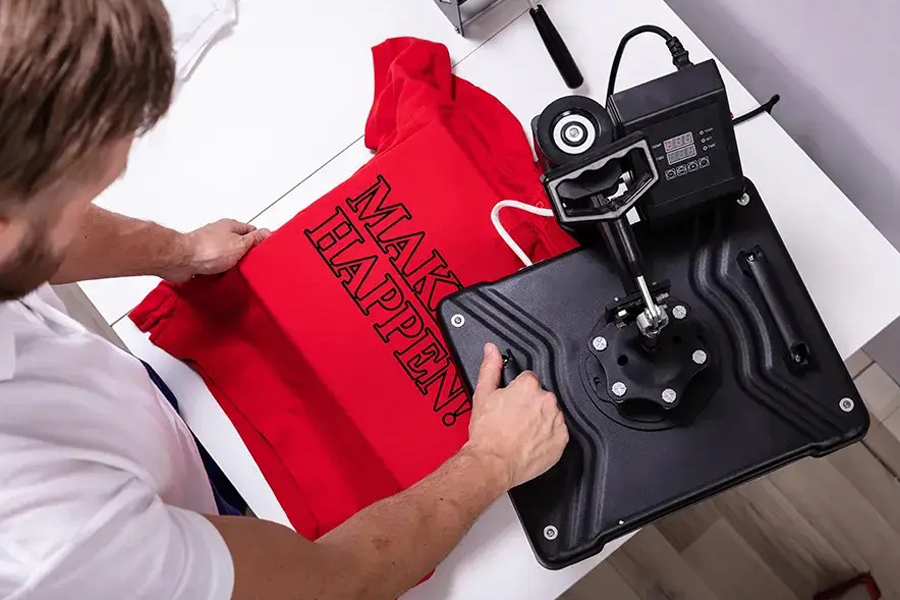
Dye sublimation printing or all-over printing is also among the most popular types of shirt printing techniques. In this process, the designs are digitally printed onto a heat transfer paper, which is then heated to cause the dye-based ink to penetrate into the fabric.
Dye sublimation is the best ways to print on shirts if you want vivid and long-lasting results. However, it is only suited for synthetic materials like polyester.
The higher the percentage of polyester in your t-shirts, the better the results will be. Also, this type of t-shirt printing is only the best with white polyester t-shirts because dark colors will cause the dye to completely integrate into the fabric, resulting in very low-quality prints.
Benefits:
➣ It can easily print designs all over a t-shirt from seam to seam
➣ Sublimation printing method produced long-lasting results on polyester fabrics
➣ This is one of the most durable type of shirt printing method out of all the different methods of printing on t-shirts because it doesn’t fade or crack over time
Challenges:
➣ It is time-consuming
➣ Sublimation printing is less cost-effective for bulk orders
➣ Dye sublimation is not suited for cotton or dark colored t-shirts
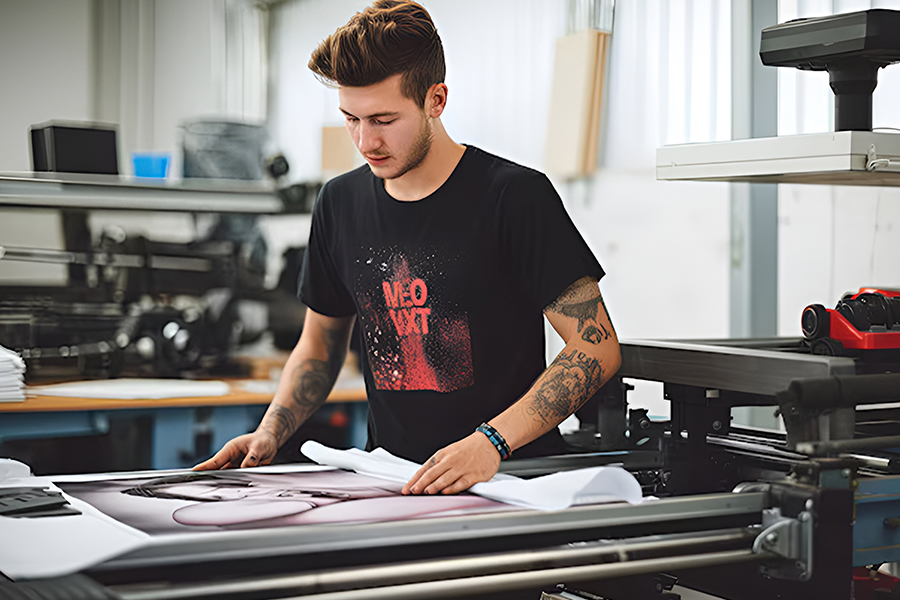
Plastisol Transfers
Plastisol transfer is a type of indirect screen printing method. In this method, the inks are first applied on to the plastisol transfer paper, which are then heat pressed on to the t-shirt. Plastisol transfer is a cost-effective alternative to screen printing and is good for printing t-shirts in smaller quantities. This type of shirt printing method works best with sturdy and durable fabrics, like fleece, which can handle pressure and heat without any damage.
Benefits:
➣ Plastisol transfer produces extremely durable designs that are resistant to fading or cracking
➣ Excellent for printing t-shirts with minor variations, such as sports team uniforms, where you only need to change player numbers or names
➣ It makes easy to achieve both glossy and matte finishes based on your requirements
Challenges:
➣ Not suitable for bulk orders
➣ This method cannot be used for photographic images or half-tones
➣ Plastisol transfer requires a high level of expertise, which can be time-consuming and slow down production
➣ Plastisol prints cannot be ironed
➣ Plastisol inks have a heavier feel than water based inks
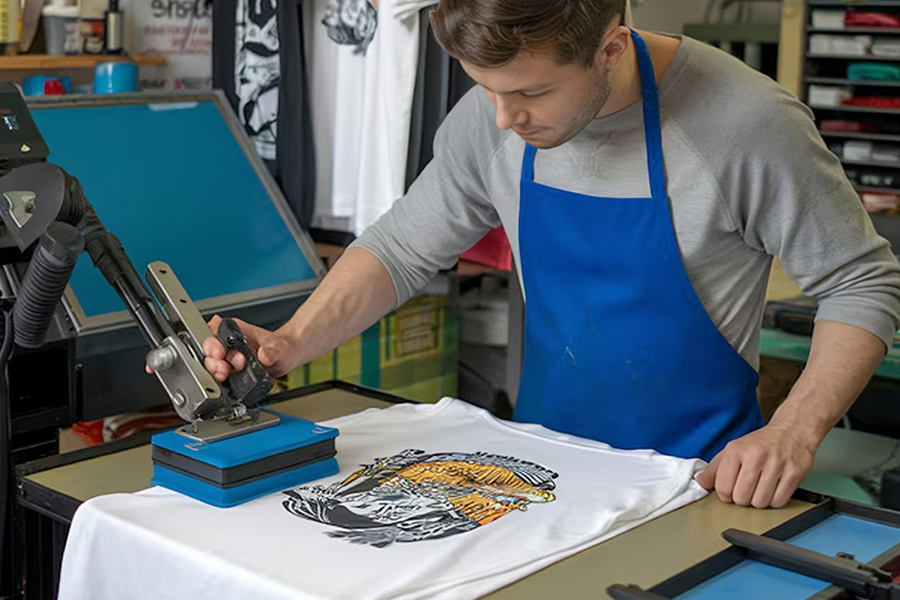
Heat transfer vinyl or iron-on-printing is another type of t-shirt printing method. This technique is commonly used for printing sports team jerseys with logos, players’ names or numbers. HTV printing involves cutting of designs that are colored on vinyl plastic-based sheets with a machine, and then transferring them onto the t-shirt using a heat press.
Benefits:
➣ HTV printing is ideal for small-scale projects
➣ It is very cost-effective and the set-up cost is very low
➣ This is one of those shirt printing types that results in durable prints
➣ HTV printing can be done on a variety of fabrics, including cotton, polyester, nylon, and even leather
Challenges:
➣ HTV printing only works for text-based designs
➣ This type of t-shirt printing method is time-consuming because it involves precise cutting of the designs
➣ HTV printing is not suitable for large-scale production
➣ It doesn’t work well on dark backgrounds
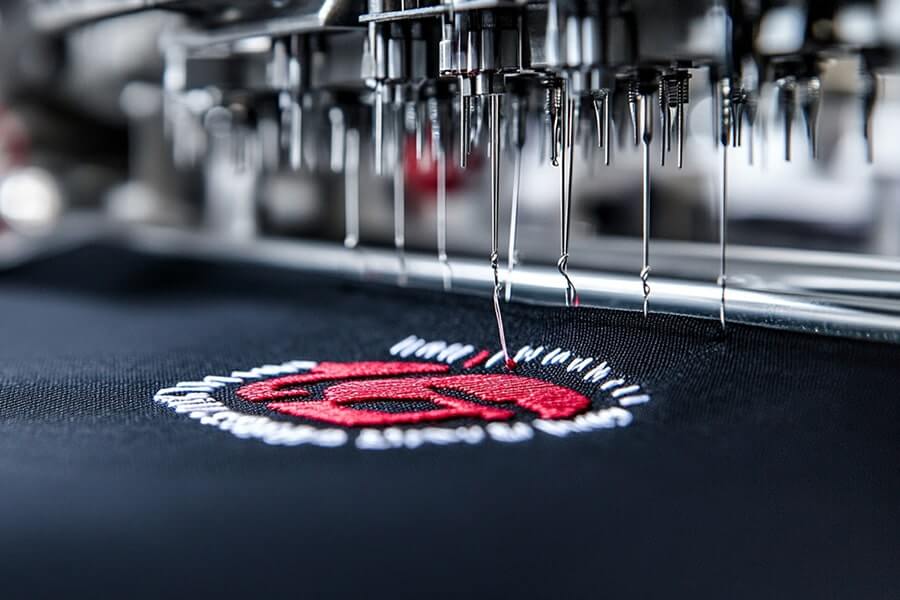
Embroidery is the best method to make graphic tees. Embroidered logos and designs are more durable than all the other types of shirt printing methods. However, with embroidery, you need to strictly follow design requirements because the designs are made with a sewing machine.
Benefits:
➣ Embroidered designs are extremely durable than any other types of shirt prints
➣ It looks professional and is timeless
➣ It is more eco-friendly because no dyes are involved throughout the process
Challenges:
➣ Embroidery method is not suitable for detailed designs
➣ Very strict design requirements
➣ Expensive than other types of t-shirt printing methods
Discharge Printing
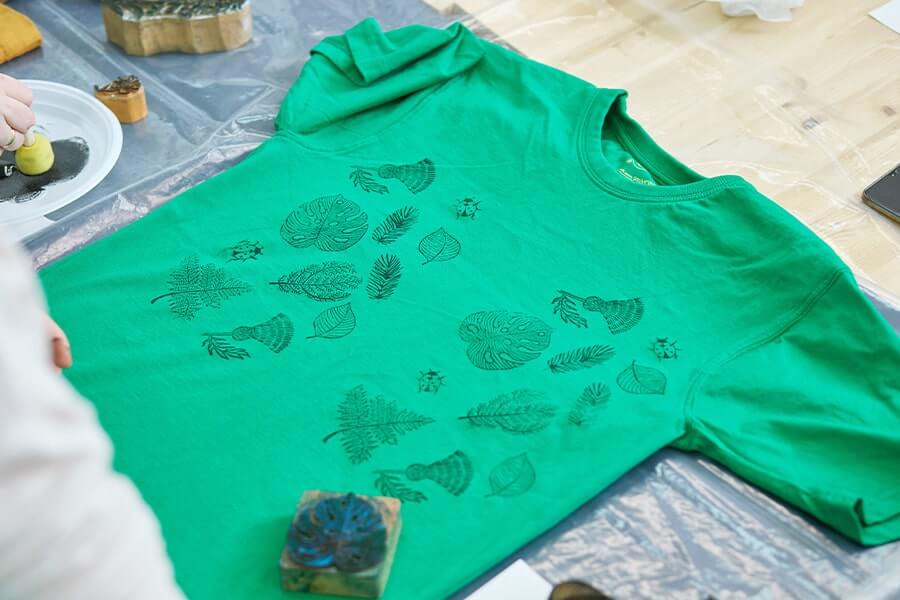
Discharge printing is the best method for printing designs on dark-colored t-shirts. It results in extremely soft designs that become part of the fabric rather than sitting on top of it. In this type of shirt printing technique, the discharge ink is applied which deactivates the dye in the fabric. This removes the garment’s original dye, and reveals the fabric’s natural color or the dye’s lighter shade.
Benefits:
➣ Discharge inks integrates smoothly into fabric which results in super soft designs
➣ It is resistant to cracking, fading, or peeling
➣ This type of shirt printing method works great on dark colored garments
➣ Discharge printing gives your designs a stylish, washed-out look
Challenges:
➣ Color outcomes with discharge printing are less predictable
➣ It is not eco-friendly
➣ Slight variations can occur between the garment’s colors
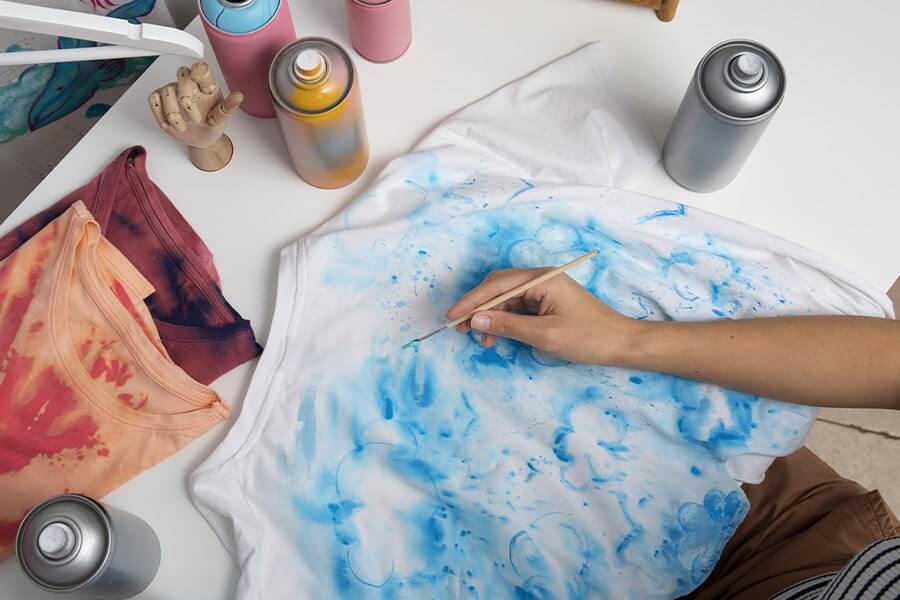
Airbrushing
Airbrushing is among the manual types of shirt printing methods, which uses a small spray painting tool. This shirt printing method is excellent option for individuals who enjoy experimenting with colors, gradients, and effects to create truly unique designs. It can be done on a variety of fabrics; however, the type of paint you opt for has a huge impact on the print results.
Benefits:
➣ Airbrushing is extremely easy to start and do yourself
➣ It is an inexpensive shirt printing method
➣ Airbrushing allows creativity for small, personalized projects
Challenges:
➣ It is not good for complex designs
➣ Airbrushing is less durable than all the other different methods of t-shirt printing; thus, not suitable for garments that are to be worn and washed often
➣ This method is not suitable for bulk orders as it involves manual labor
➣ Airbrushed designs are of low-quality
Out of all the different types of shirt printing methods available, it might be difficult to choose the right one for your project. Therefore, we have done a quick comparison for you to help you choose the best shirt printing method based on your budget, print colors, design complexity, and order volume.
Here’s a quick comparison of all the above-mentioned types of t-shirt printing methods:
| Type of Shirt Printing Method | Quality | Design Options | Durability | Unlimited Colors | Eco-friendly | Volume | Cost |
|---|---|---|---|---|---|---|---|
| Screen Printing | High | Low | High | No | No | Bulk orders | Medium |
| Direct-to-garment Printing | High | High | Medium | Yes | Yes | Small scale production | Medium |
| Heat Transfer Vinyl Printing | Varies | Varies | Varies | No | No | Small to medium scale production | Varies |
| Sublimation Printing | High | Low | High | Yes | Yes | Small to medium scale production | High |
| Embroidery | High | Low | High | Yes | Yes | Small scale production | High |
| Airbrushing | Low | Low | Low | Yes | No | Small scale production | Low |
| Plastisol Transfer | High | Low | High | No | No | Small scale production | Low |
| Discharge Printing | Medium | Low | High | Yes | No | Small to medium scale production | Medium |
What Types of Shirt Printing Methods Are Available at ApparelnBags?
ApparelnBags offers you the following different types of t-shirt printing methods:
1. Screen printing; known for vibrant and long-lasting prints for larger batches, and is cost-effective for bulk orders.
2. Direct to garment printing; perfect for printing complex designs on cotton fabrics; however, it may be slightly expensive for bulk orders.
3. Sublimation printing; best shirt printing method for all-over prints on polyester fabrics, and resulting in vibrant and durable prints.
4. Heat transfer vinyl printing; works best for text-based designs for sports jerseys.
5. Embroidery; an incredibly durable method for creating custom apparel, and is also eco-friendly.
How to Create Custom T-Shirts with ApparelnBags?
ApparelnBags stands out as a leading supplier for custom t-shirts. We provide various types of shirt printing methods, to let you design your t-shirts exactly the way you want, while staying within budget. From screen printing, and embroidery, to DTG (Direct to Garment) printing, heat transfer and many more advanced customization options, you can easily choose the most suitable method according to your requirements.
To create custom t-shirts with ApparelnBags, follow these steps:
Browse T-Shirt Options
Check out our wide range of custom t-shirts options available on the website. Choose the type, color, and size that best suits your preferences.
Select Printing Method
ApparelnBags offers various types of shirt printing methods. Select the one that aligns with your design and budget, such as screen printing, DTG (Direct to Garment) printing, or heat transfer.
Upload Your Design
Once you’ve chosen your t-shirt and printing method, upload your logo or design, and adjust its placement and size.
Review and Confirm
Double-check your order details, including t-shirt type, color, size, and printing method to make sure your design turn out exactly the same way you want.
Add to Cart and Checkout
After confirming your order, add the custom t-shirts to your cart and proceed to checkout, where you’ll be provides shipping information and select a payment method.
ApparelnBags provides tracking information for your shipment. Monitor the progress of your order as it makes its way to your doorstep.
Experience On Time Delivery
Once your custom t-shirts arrive, enjoy the satisfaction of wearing or sharing unique designs created through ApparelnBags.