

Notebooks might seem a bit “old-fashioned” in offices where meetings, planning, and daily tasks mostly happen on screens. But they’re far from obsolete. From boardroom discussion to hands-on planning sessions, employees still rely on different types of notebooks to scribble ideas and track projects.
That’s one of the key advantages of notebooks. Beyond helping employees write and organize important notes, customized notebooks with your logo also increase brand exposure. They’re used in meetings, carried across departments, and often taken outside the office.
However, this only works when you choose the right type of notebook. Read below to find the different types of notebooks and understand which one best fits your business needs.
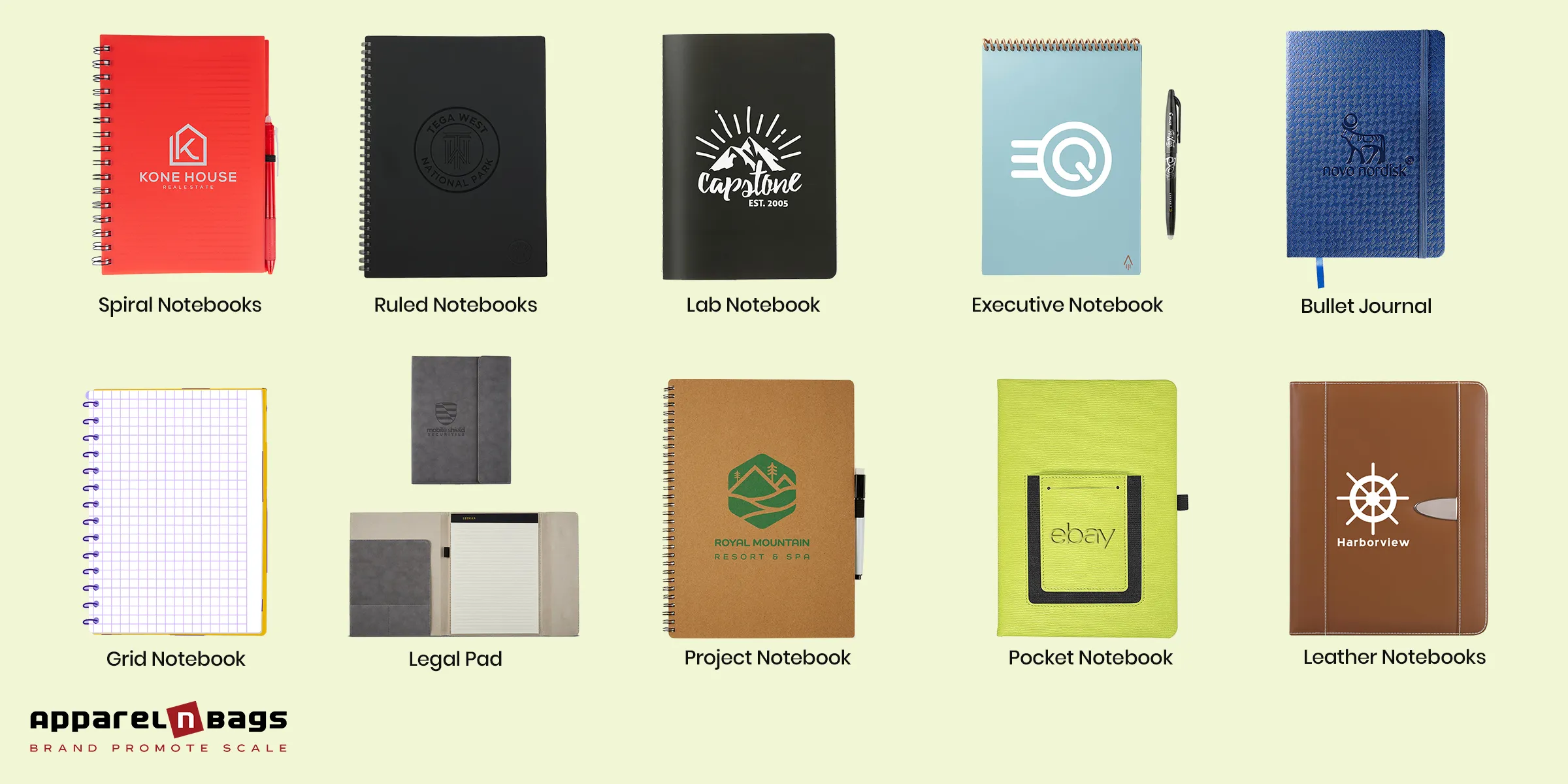
Popular Types of Notebooks and Their Uses
Some types of notebooks have thick, strongly bonded pages, while others feature thin paper or come in different sizes and formats. Each variation gives a notebook its unique purpose and distinguishes it from the rest.
Here’s a look at different types of notebooks and their ideal uses.
| S.No | Notebook Type | Ideal Uses |
|---|---|---|
| 1 | Spiral Notebook | Meeting notes, daily tasks, brainstorming, team collaboration |
| 2 | Ruled Notebook | Accounting, legal documentation, structured office records |
| 3 | Grid Notebook | Engineering work, measurements, diagrams, calculations |
| 4 | Bullet Journal | Project tracking, task planning, visual workflows |
| 6 | Legal Pad | Quick note-taking, meeting minutes, drafting ideas |
| 7 | Pocket Notebook | Field work, quick measurements, on-the-go notes |
Types of Notebooks You Should Know About
Businesses come across a wide range of notebooks when setting up their offices. But not all are suitable for their offices. Here are the different notebook types and their specialties:
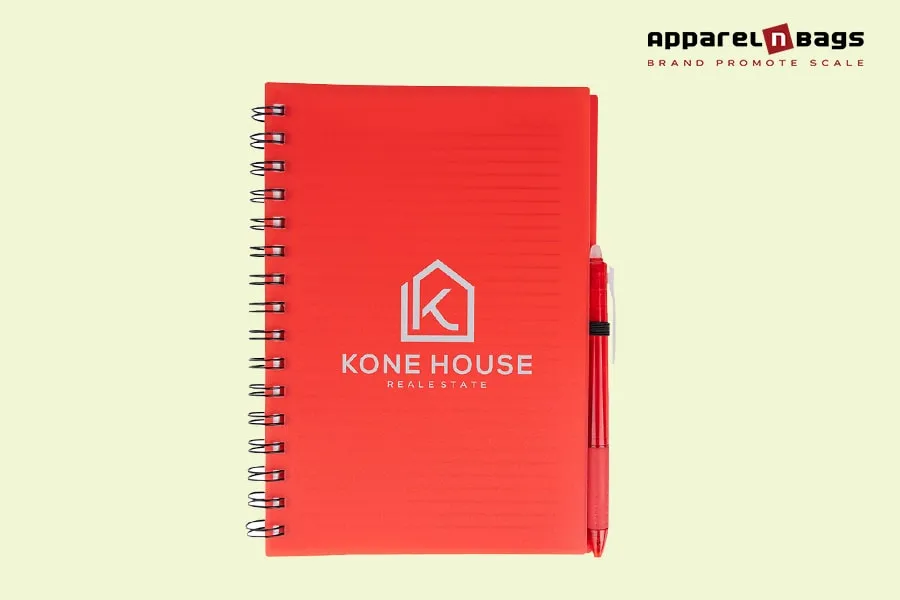
Spiral Notebooks
One of the common issues we all face when writing in a notebook is that the pages sometimes slide up and down. That makes writing quite hard. But spiral notebook pages are bound with a metal spiral, sort of a spring, instead of a hard glued close bond. It allows the pages to rotate 360 degrees, which makes the pages lie flat from both ends.
Since the pages are not glued and are loosely piled in the spiral. So, it is easy to tear the pages out as well. You can take out sheets to share designs, notes, or other important information with colleagues.
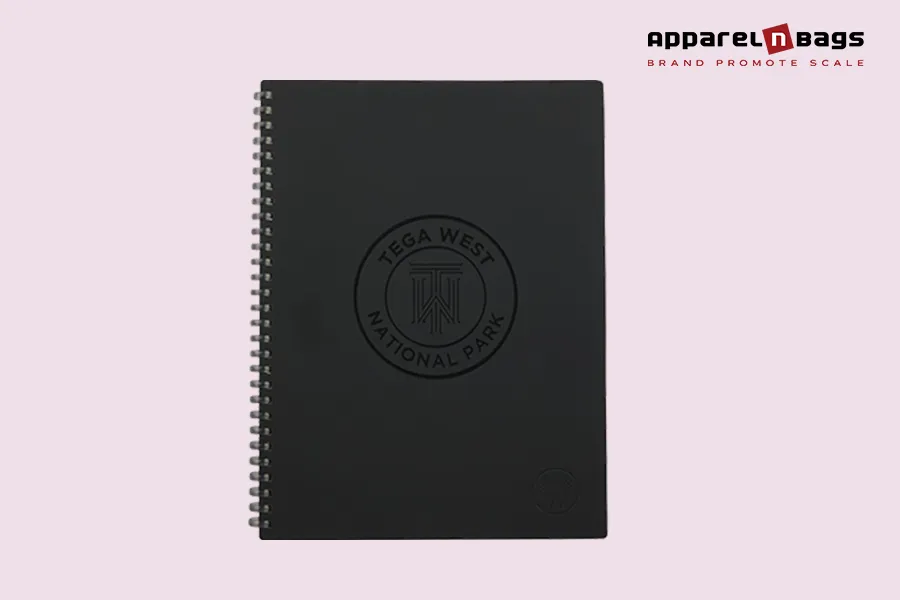
Ruled Notebooks
Ruled notebooks are similar to spiral notebooks. But they are often associated with accounting, legal documentation, and other formal office work. The horizontal lines on each page help keep writing clear, organized, and easy to read.
Lab Notebooks
In research centers and laboratories, workers focus more on recording measurements than taking meeting notes. For this kind of work, lab notebooks are the go-to choice among all kinds of notebooks. Unlike regular notebooks with plain lines, lab notebooks often feature grids or ruled pages on both sides. It makes it much easier to write neatly and read back your notes.

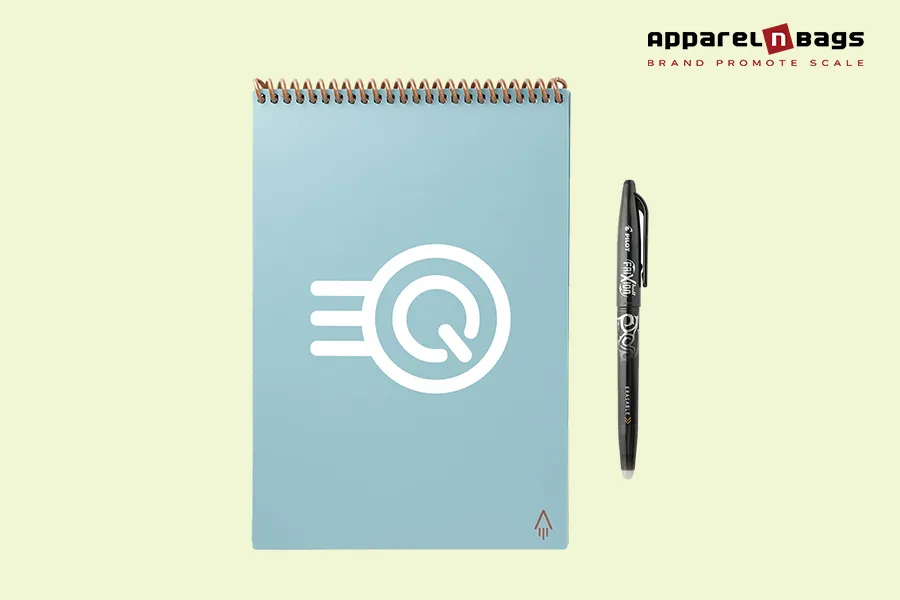
Executive Notebooks
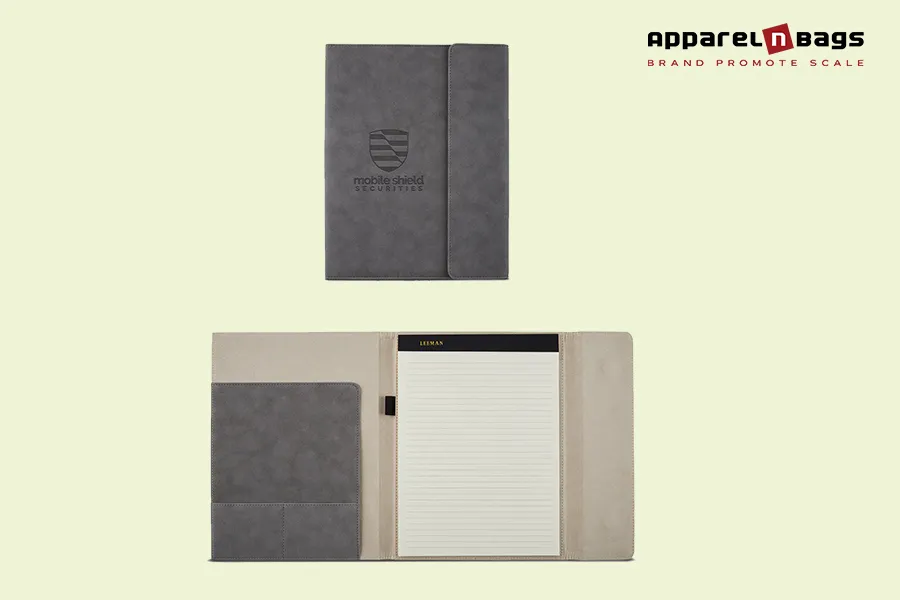
You’ve likely seen an executive carrying a refined notebook in meetings. Often with a leather cover and cream-colored pages. These are executive notebooks, designed to reflect professionalism and authority in formal business meetings. These kind of notebooks are commonly used by senior leaders and management teams, particularly during board meetings.
Bullet Journals
Bullet journals are dot-grid pages rather than lined or fully blank sheets. This design often leads people to mistake them for “art notebooks”. In reality, the subtle dot pattern makes easy to write points, create charts, and show visual planning.
Unlike traditional notebooks, bullet journals are made around a customizable system. Users create their own index, symbols (keys), and collections. This makes them especially useful for tracking project progress and visualizing processes.
Grid Notebooks
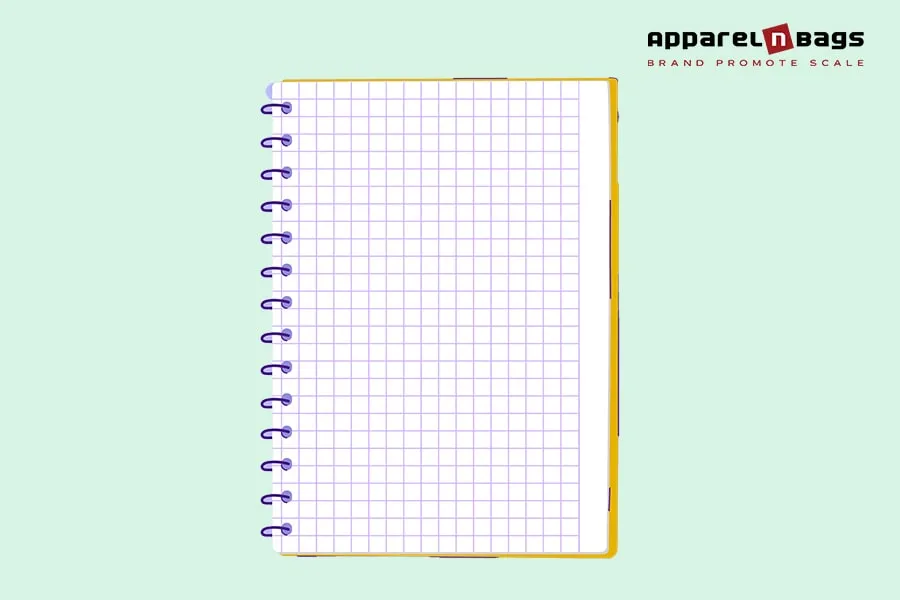
You may have noticed that all notebooks have either vertical lines, grids, bullets, or something on both pages. But in grid notebooks it is a bit different. On one side of the page, they have grids (small squares), and on the other side they have blank pages. At first, they may seem like the best type of notebook just for mathematics.
But today, grid notebooks are in demand across industries like architecture, engineering, and manufacturing. The grid side helps engineers measure and draw, while the blank side is perfect for calculations or notes.
Legal Pads
Legal pads are typically 8.5″ x 11″ in size, with horizontal lines and a left-hand margin. Instead of being glued on the left side of the pages, they are bound from the top. But the glue is not too strong, so it does not make it hard to tear the pages out or leave half or corners stuck in the bind. You can easily flip pages and remove notes when needed.
These notebooks are commonly used by employees for quick note-taking. Their simple design makes them ideal for documentation drafting, and recording meeting minutes.

Project Notebooks
Planner notebooks provide a quick and structured view of schedules similar to a Google Calendar. Because each page includes a top margin with dates and horizontal lines at the bottom for notes.
These types of notebooks for writing help track and manage projects efficiently. Their structured layout makes them popular among engineers and project managers who need to organize tasks in one accessible format.
Pocket Notebooks
A type of notebook with 3”×5” to 4”×6” dimensions. Tiny, portable, and fits right in your pocket. Among all types of notebooks, they are preferable for all workers. Because of the size, they fit in pockets, and any worker can keep them everywhere.
They work best for construction sites and plant installation work. Due to their compact size, workers can keep them in their pockets and carry notes and measurements with them at all times.

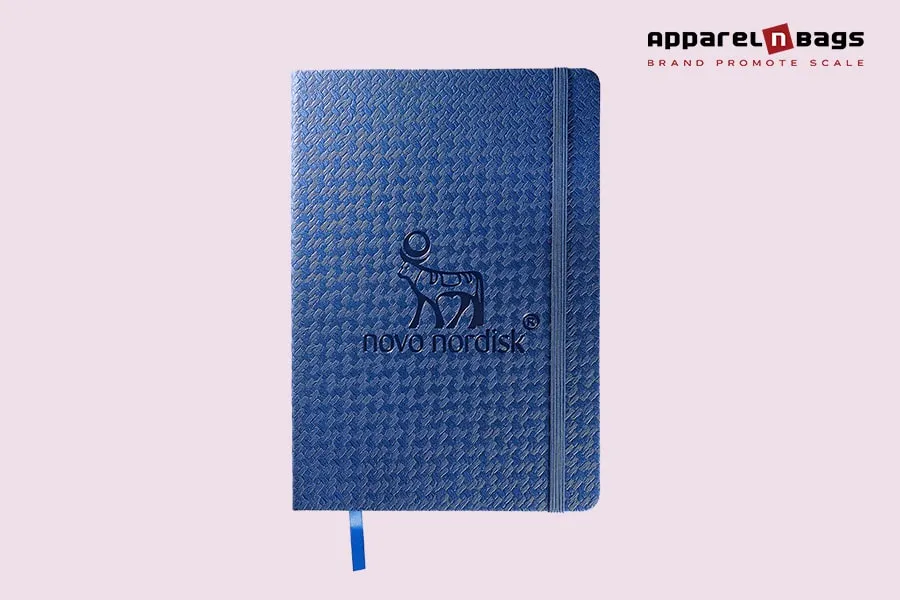
Leather Notebooks
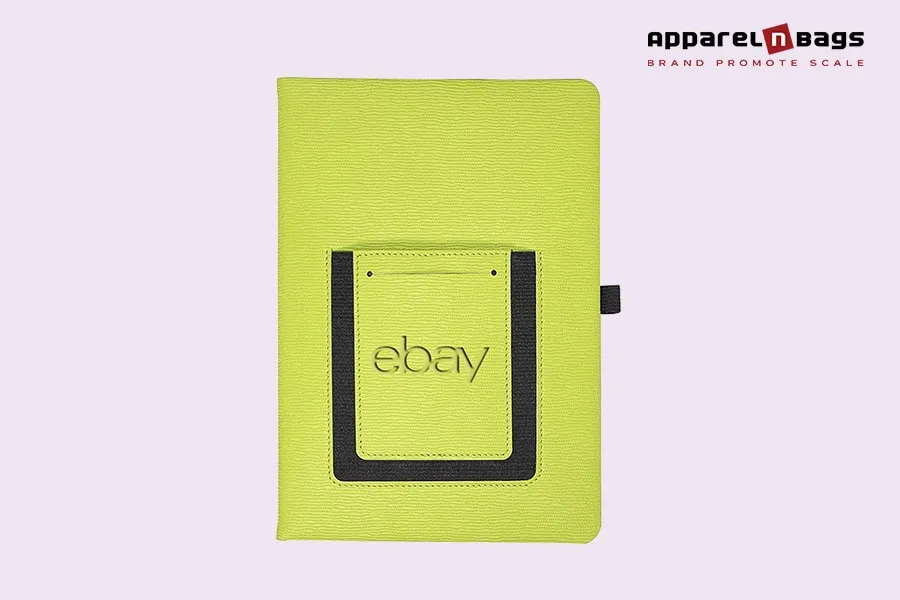
The pages of these notebooks are similar to the others, with vertical lines and sometimes a date option on top. What sets their demand high is the cover, which is made from leather. Companies seek these types of notebooks to print their logos on and use them as promotional items.

How to Choose the Right Notebook for Your Needs?
As there are different kinds of notebooks and each serves different jobs, choosing the ideal notebook for your business can be a bit hard. Here is a quick look to find which one is ideal for you:
- Meetings: Usually, meetings are about noting points and sharing your ideas. The most ideal notebooks will be the spiral and ruled notebooks. In them, you can clearly write the points and highlight them.
- Field Work: Mostly, field work is related to installing plants, machinery, or construction. Here, grid notebooks and pocket notebooks are ideal. On them, you can mark the dates, assign the tasks, and keep track. On the blank pages of the grid notebook, you can draw and show the visual concepts to others.
- Executive Meetinga: In board meetings with CEOs or senior management, executive or leather notebooks are the preferred choice. Their appearance fits the professional environment.
Comparison of Different Notebook Types
| Types | Description | Common Uses | Page Count | Dimensions |
|---|---|---|---|---|
| Spiral Notebooks | Notebook with metal spiral binding; pages lay flat for easy writing. | Meetings, note-taking, collaborative work | 70–200 pages | A4, A5, Letter |
| Ruled Notebooks | Notebook with horizontal lines; structured for clear writing. | Accounting, legal documentation, office records | 80–250 pages | A4, A5 |
| Lab Notebooks | Hardcover, permanently bound book with numbered pages. | Scientific research, pharma, biotech | 100–300 pages | A4, A5 |
| Bullet Journal | Dot-grid notebook for flexible layouts and planning. | Project tracking, task management, visual planning | 120–200 pages | A5, B5 |
| Grid Notebooks | Pages with square grids for measurements and drawings. | Engineering, architecture, technical drawings | 100–200 pages | A4, A5 |
| Legal Pads | Top-bound pages with horizontal lines and left margin. | Meeting notes, drafting, office tasks | 50–100 pages | 8.5″×11″ |
| Planner Notebooks | Structured notebooks with dates and lines for tasks. | Project management, scheduling, task tracking | 100–200 pages | A5, A4 |
| Pocket Notebook | Small, portable notebooks for on-the-go notes. | Field work, quick measurements, office tasks | 40–100 pages | 3″×5″ to 4″×6″ |
Frequently Asked Questions
Conclusion
Notebooks are an essential part of day-to-day office work. However, varying roles, work environments, and usage needs require specific notebook formats. That’s why it’s important to understand the types of notebooks outlined above helps you select the option that best supports your team’s workflow and daily tasks.