

We mostly think of aprons as the classic bib-style chef apron that hangs from the neck and covers the upper body down to the knees. While this is the most familiar type, in reality, there are many other types of aprons designed for different industries and purposes.
Across industries such as restaurants, healthcare, and laboratories, aprons differ in style and material. Some are designed to provide protection against chemicals. While others are intended to withstand heat, spills, or strict hygiene environments.
Given the wide range of apron types available, choosing the right option can be confusing. To simplify this process, we analyzed feedback from 1,000+ commercial clients and tested 50+ apron styles across restaurant, healthcare, and industrial environments. Based on this research, below we’ve outlined the most common types of aprons and the workplaces where they are typically used.


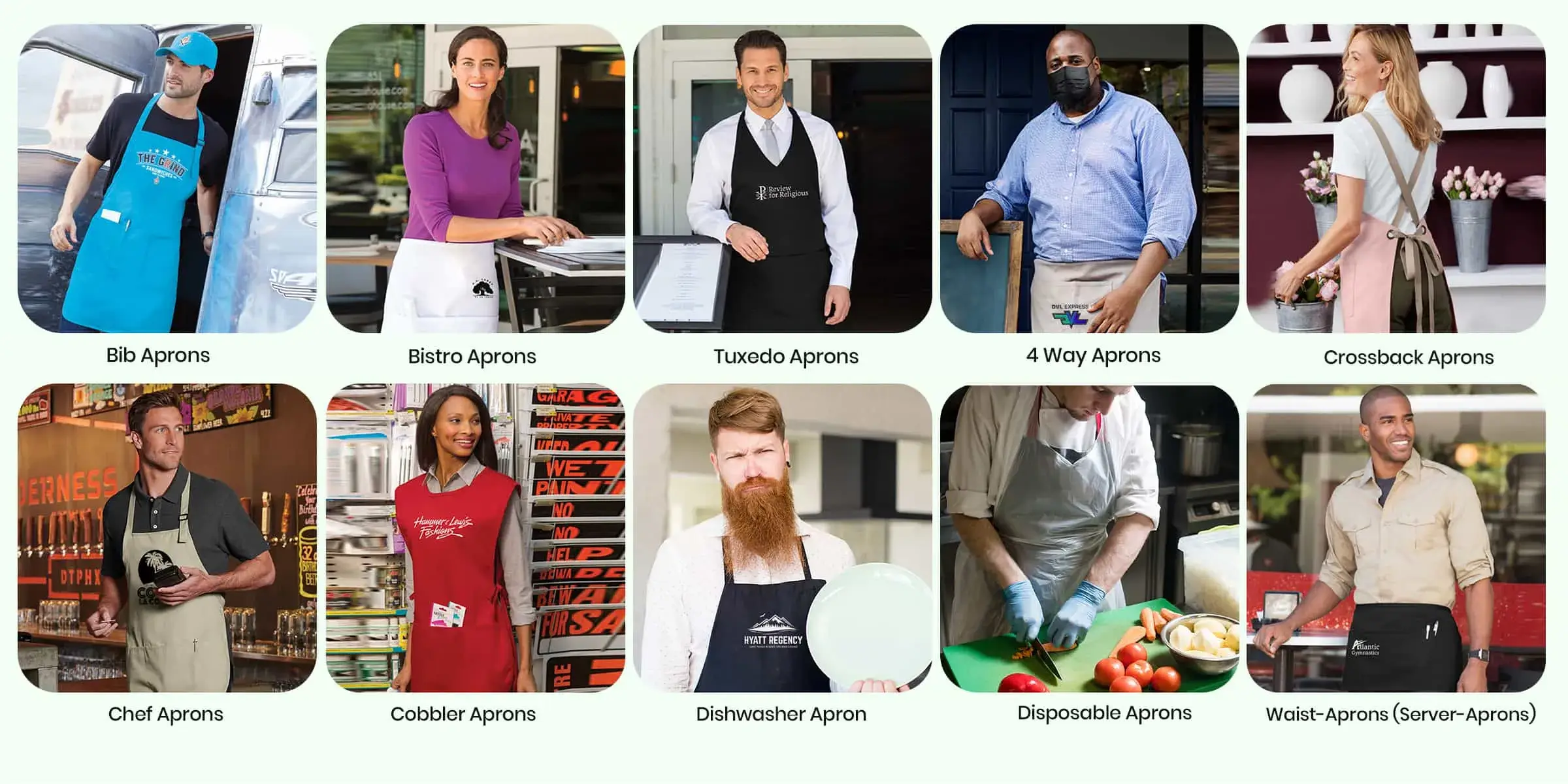
Type of Aprons for Home Use
No one wants to get stains on their clothes while cooking. That’s why they use aprons. But putting an extra layer of clothing brings many challenges as well. Through our testing of 30+ home-use aprons, we found that cheaper options often use thin fabrics (under 5 oz) that allow stains to penetrate through to clothing. Conversely, heavy-duty aprons without breathable weaves can trap heat, causing discomfort during cooking sessions lasting 2+ hours.
After testing different kinds of apron materials for stain resistance (using oil, tomato sauce, and wine) and measuring breathability using fabric GSM ratings, we’ve identified the most practical apron types for home kitchens.
Bib Aprons
They are the most commonly used aprons in cooking places. They tie around the waist at the back and have an adjustable neck loop, covering both the upper and lower body. Almost every bib apron has pockets in the front, usually rectangular or square, where you can keep handy items like kitchen utensils.

Commonly used in: Home kitchens, baking studios, family cooking spaces
Best suited for: Heavy cooking, baking, messy food preparation, sauce-making, grilling
Primary purpose: Maximum frontal protection from spills, splatters, and stains

Full Aprons
Full aprons are also called full-length bib aprons. They extend from chest to shin, providing approximately 6-8 inches more coverage than standard bib aprons. This extended protection is particularly useful in professional kitchens or food preparation areas, where staff frequently lean over counters, reach into lower cabinets, or work with liquids that could stain clothing.
Many full aprons are made from durable, stain-resistant fabrics. These materials provide protection while remaining breathable and comfortable during long shifts.
Commonly used in: Professional kitchens, butcher shops, commercial bakeries
Best suited for: Tasks requiring kneeling and bending
Primary purpose: Provides full lower-body protection for chefs and kitchen staff
Cobbler Aprons
Cobbler aprons are designed like a protective smock. It covers both the front and back of the upper body. Their t-shirt-like shape, with sleeves starting just past the shoulders, allows full arm mobility while keeping clothing protected from spills and stains.
Unlike traditional kitchen aprons, cobbler aprons are not limited to cooking. They are also commonly used for cleaning and other household tasks. Their full coverage makes them a practical choice for any role that requires both protection and comfort.
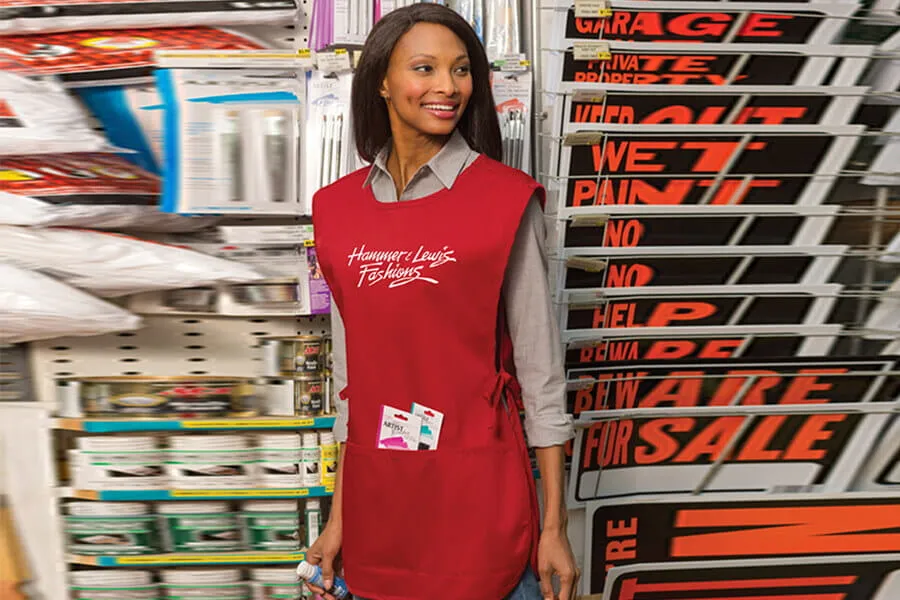
Commonly used in: Childcare centers, cleaning services, pottery work, art classes
Best suited for: Work requiring back and side protection while rotating frequently
Primary purpose: Side-to-side protection with ergonomic weight distribution that prevents neck fatigue

Crossback Aprons
For home use, cross-back aprons are a perfect option. Unlike other cooking aprons that hang from the neck, they use shoulder straps. This design makes them both comfortable and stylish.
From the front, a cross-back apron looks similar to a bib apron. It covers the front of the body down to the knees, providing good protection while cooking.
Commonly used in: Cafes, bakeries, retail shops, home kitchens
Best suited for: Tasks requiring shoulder mobility or long cooking work
Primary purpose: All-day comfort with full mobility and zero neck strain during prolonged use
Type of Aprons for Commercial and Professional Use
Stains are not the only thing people consider when choosing an apron for commercial use. Comfort, fabric, and fit are equally important, as they make the apron more supportive during long work shifts.
After testing 25+ commercial-grade aprons in active restaurant, hospital, and industrial kitchen environments, we identified the top apron types. Our evaluation focused on durability, protection level, and worker comfort during 8–12 hour shifts. These options are both comfortable and durable, making them suitable for hotels, commercial kitchens, catering operations, and food service facilities.
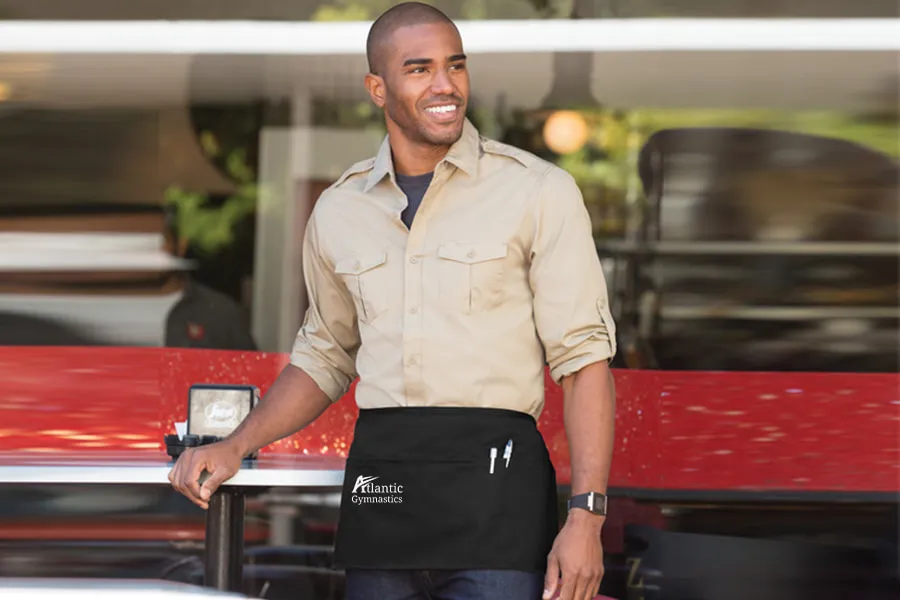
Waist Aprons (Server Aprons)
You’ve probably seen waiters in hotels or restaurants wearing a long cloth tied around the waist, often with pockets at hip level. This is called a waist apron, or server apron.
These aprons are designed to keep essential items within reach, such as order pads, pens, small knives, cash, or other tools. Beyond practicality, appearance is also important. Since waiters wear these aprons in front of guests, the style and presentation reflect the professionalism and image of the restaurant or hotel.
Commonly used in: Restaurants, cafes, bars, catering services
Best suited for: Table service, drink delivery, order taking, guest interaction
Primary purpose: Hold order pads and pens while maintaining clean appearance
4-Way Aprons
Food spills in kitchens are unavoidable, which makes aprons dirty very quickly. To solve this issue, 4-way aprons are used. In appearance, they are similar to waist aprons and tie at the back in the same way.
The key difference is that a 4-way apron comes with four usable surfaces. This makes the apron easier to manage during busy shifts. Workers can simply flip or fold the apron to expose a clean section. This instantly gives a fresh and tidy appearance without needing to change aprons.
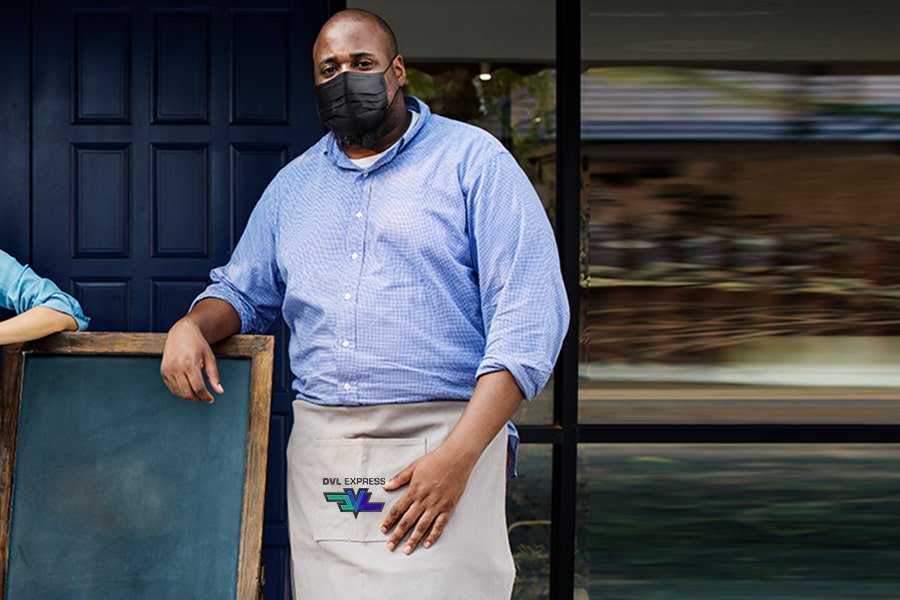
Commonly used in: Butcher shops, prep kitchens, restaurants
Best suited for: Shifts lasting eight hours or longer with heavy soiling
Primary purpose: Extended use between changes by rotating to clean sections, reducing laundry frequency and downtime
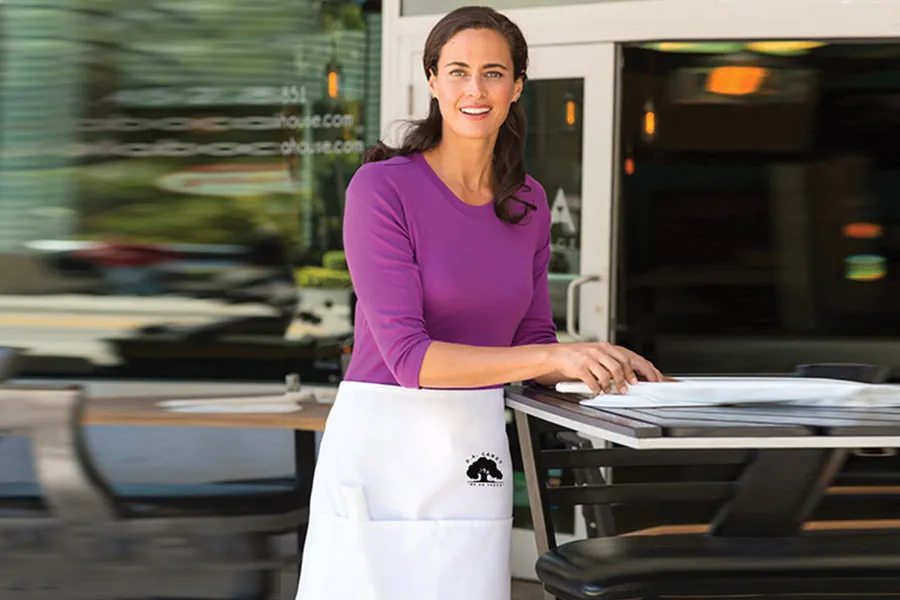
Bistro Aprons
Bistro aprons are the “larger size” of the waist aprons. They come a bit longer, ending below the knees. This style often includes one or multiple pockets, making it practical for front-of-house staff to carry order pads, pens, or other essentials.
Bistro aprons are also available in 10–20 color options. This allows business owners to choose aprons that complement the overall décor. While commonly used by front-of-house staff, they can also be worn by back-of-house employee.
Commonly used in: Wine bars, bistros, craft cocktail bars, specialty coffee shops
Best suited for: Table service in settings where style matches the decor
Primary purpose: Provide knee-length coverage while projecting polished staff appearance
Tuxedo Aprons
Tuxedo aprons cover the full front of the body, similar to a bib apron. But, they are designed to create a polished and professional appearance. They usually feature a V-shaped neckline and come in classic black color. Some designs also have subtle touches, like white pinstripes or satin trim, giving a professional look.
These aprons are primarily worn by servers in fine-dining restaurants and banquet halls. They cover the clothes completely, protecting them from spills and stains. At the same time, their stylish V-neck and subtle design help staff look professional.
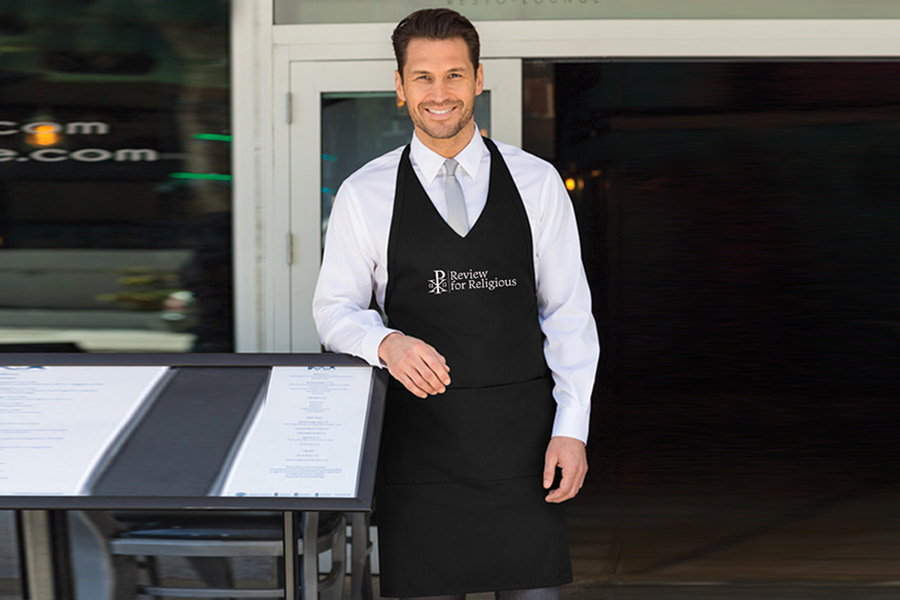
Commonly used in: Fine dining restaurants, formal catering, luxury hotels, black-tie events
Best suited for: White-table cloth dining, wine service, VIP guest interaction
Primary purpose: Create formal staff appearance while protecting server uniforms

Chef Aprons
For professional cooks, the chef apron is as important as their utensils. They protect clothes from spills, stains, and hot splashes during daily kitchen work.
Kitchens are hot, fast-paced, and messy, so chef aprons need to be both tough and breathable. That’s why they’re usually made from lightweight yet sturdy fabrics like heavy-duty cotton or poly-cotton blends. The fabric protects against spills and heat, while keeping the apron light so cooks can work comfortably.
Beyond fabric quality, restaurants and catering businesses also consider color when selecting chef aprons. Darker shades, such as black or brown, are ideal because they conceal stains, maintain a clean appearance for longer shifts. Plus the darker shades make the staff look professional.
Commonly used in: Commercial kitchens, culinary schools, catering operations, food production facilities
Best suited for: Line cooking, high-heat environments, knife work, food manufacturing plants
Primary purpose: Cooking over open flame, knife prep, hot oil work
Dishwasher Aprons
In any busy kitchen, washing dishes is messy and unavoidable. When it is done, water splashes, soap, and steam soak through regular clothing. It makes uniforms completely wet. That’s where dishwasher aprons come in.
Unlike regular aprons, dishwasher aprons are made from waterproof materials such as vinyl, rubber, or treated canvas. These fabrics create a strong barrier against water, keeping staff dry while still allowing freedom of movement.

Commonly used in: Commercial dish pits, industrial kitchens, food processing facilities, brewery cleaning stations
Best suited for: Wet environments, chemical exposure, high-temperature water spray
Primary purpose: Waterproof protection from sustained water exposure, heat, and cleaning chemicals

Disposable Aprons
In chemical labs and vaccination facilities, germs can be everywhere. In these places, where cross-contamination is a real concern, disposable aprons are the go-to choice. They provide a one-time barrier against contamination.
These aprons are made from lightweight plastic or poly films. The material is thin yet fully waterproof. They slip on easily with elastic or tie closures, letting staff move around freely while staying protected. When the shift is done, simply toss them. This keeps clothes and uniforms clean, fresh, and bacteria-free.
Commonly used in: Healthcare facilities, food processing plants, laboratories
Best suited for: Patient care, lab testing, food handling, animal treatment procedures
Primary purpose: Preventing cross-contamination between tasks, patients, or processes through single-use barrier protection
Carpenters and Woodworkers Aprons
Aprons are not limited to kitchens and hospitality environments. In workshops, such as carpentry and woodworking, workers rely on specialized aprons. They need the aprons that protect their clothing from sawdust, wood shavings, and sharp tools.
These aprons are made from heavy-duty materials such as canvas or leather. The fabrics are both durable and flexible, allowing workers to move freely while staying protected.
One of the best things about a carpenter apron is the pockets. Most aprons have four to six pockets, so tools stay close by. This keeps work faster and safer because sharp tools are stored securely while you work.
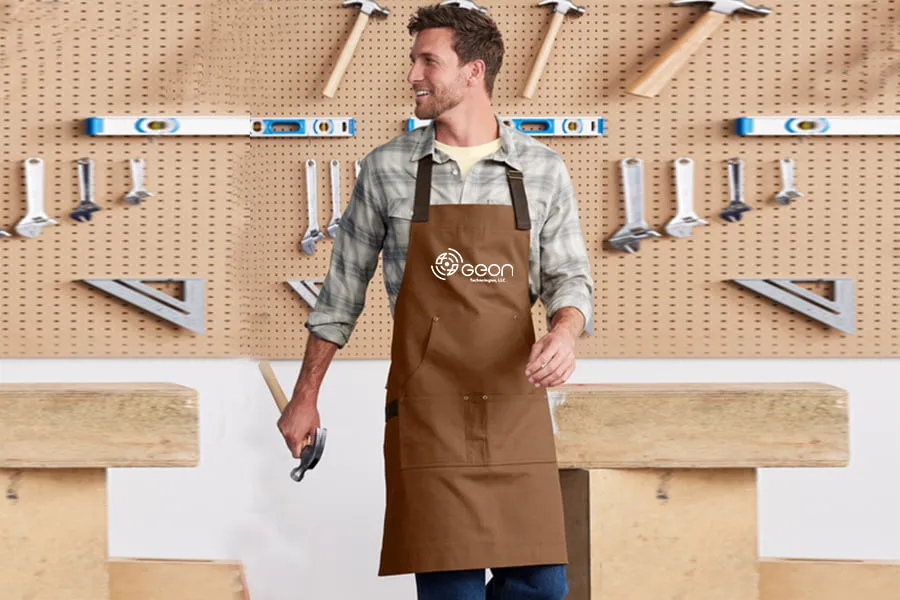
Commonly used in: Workshops, carpentry shops, woodworking studios, and construction sites.
Best suited for: Carpenters, woodworkers, and craftsmen handling tools and raw materials
Primary purpose: Protect clothing from dust, debris, and sharp tools while keeping essential tools easily accessible


Types of Aprons and Their Key Features
| Type of Apron | Best For | Common Length | Key Features | Ideal Buyers |
|---|---|---|---|---|
| Bib Aprons | Cooking, baking, crafting | 28–34 inches | Neck strap, full front coverage, pockets | Home users, cafes, schools |
| Full Aprons | Heavy kitchen work | 34–40 inches | Covers front and back, adjustable waist and neck straps | Commercial kitchens, chefs |
| Cobbler Aprons | Home & cleaning tasks | 16–22 inches | Easy slip-on, side ties | Cleaning staff, art instructors, childcare workers |
| Crossback Aprons | Long-hour wear | 28–34 inches | Cross-back straps, adjustable sides | Bakers, artists |
| Waist Aprons (Server) | Front-of-house service | 16–22 inches | Lightweight, quick-access pockets | Restaurants, bars |
| 4-Way Aprons | High-volume food service | 16–22 inches | Reversible, four usable panels | Commercial kitchens |
| Bistro Aprons | Professional serving | 28–34 inches | Elegant look, deep pockets | Fine dining, hospitality |
| Tuxedo Aprons | Formal service roles | 16–22 inches | Cross-back straps, full coverage, breathable fabric | Hotels, catering |
| Chef Aprons | Professional cooking | 28–34 inches | Heat-resistant, heavy-duty fabric | Chefs, culinary schools |
| Dishwasher Aprons | Wet environments | 28–34 inches | Waterproof or water-resistant | Commercial kitchens |
| Disposable Aprons | One-time use | Varies | Lightweight, waterproof, disposable | Food processing, medical, lab & catering staff |
| Carpenters & Woodworkers Aprons | Workshop tasks, handling tools | 28–34 inches | Heavy-duty fabric, multiple pockets | Carpenters, woodworkers, craftsmen |
Key Factors to Consider When Choosing Types of Aprons
Businesses often make mistakes when ordering aprons for their teams. Many get tempted by low prices or attractive deals. But end up with aprons that don’t meet durability, fit, or protection standards.
After reviewing feedback from over 1,000 clients, we’ve identified the most critical factors companies should check before placing an aprons order. Below we mentioned the most important factors. These are the points that most clients validate to ensure the aprons perform well and provide long-term value.
Fabric Durability: Workers use aprons on daily basis. So, look for fabrics that are durable and breathable. Some of the suitable fabric for aprons are cotton, poly-cotton blends, leather, or vinyl. These fabrics offer resistance to tears, spills, and frequent laundering.
Pocket Styles: Workers prefer aprons that are durable and have at least 2 to 4 pockets. This helps them keep necessary tools within reach.
Size Range & Adjustable Fit Options: Verify that aprons offer adjustable straps with at least 6-10 inches of adjustment range. One-size-fits-all aprons rarely accommodate teams with diverse body types. Look for aprons available in S, M, L, XL, and XXL sizes, with adjustable neck straps and waist ties.
Protection Level: Different aprons are designed for different tasks. Some for chefs, others for outdoor or workshop work. Before placing an order, review the apron’s specifications. Ensure it meets the specific protection needs of your team during daily operations.