

If you are on the look for the best shirt printing methods, the two most common options that you might come across are sublimation and screen printing. Both techniques are known to deliver high-quality, vibrant, and durable prints. However, each of them has its own pros and cons, and differ in terms of printing process and fulfillment techniques, making each method suitable for specific designs and projects.
In this blog, we have explained in detail how each method works, and outlined 8 key differences of sublimation vs screen printing. Read on to make an informed decision and choose the right printing method for your next project!
Sublimation Printing: How It Works, and Its Benefits
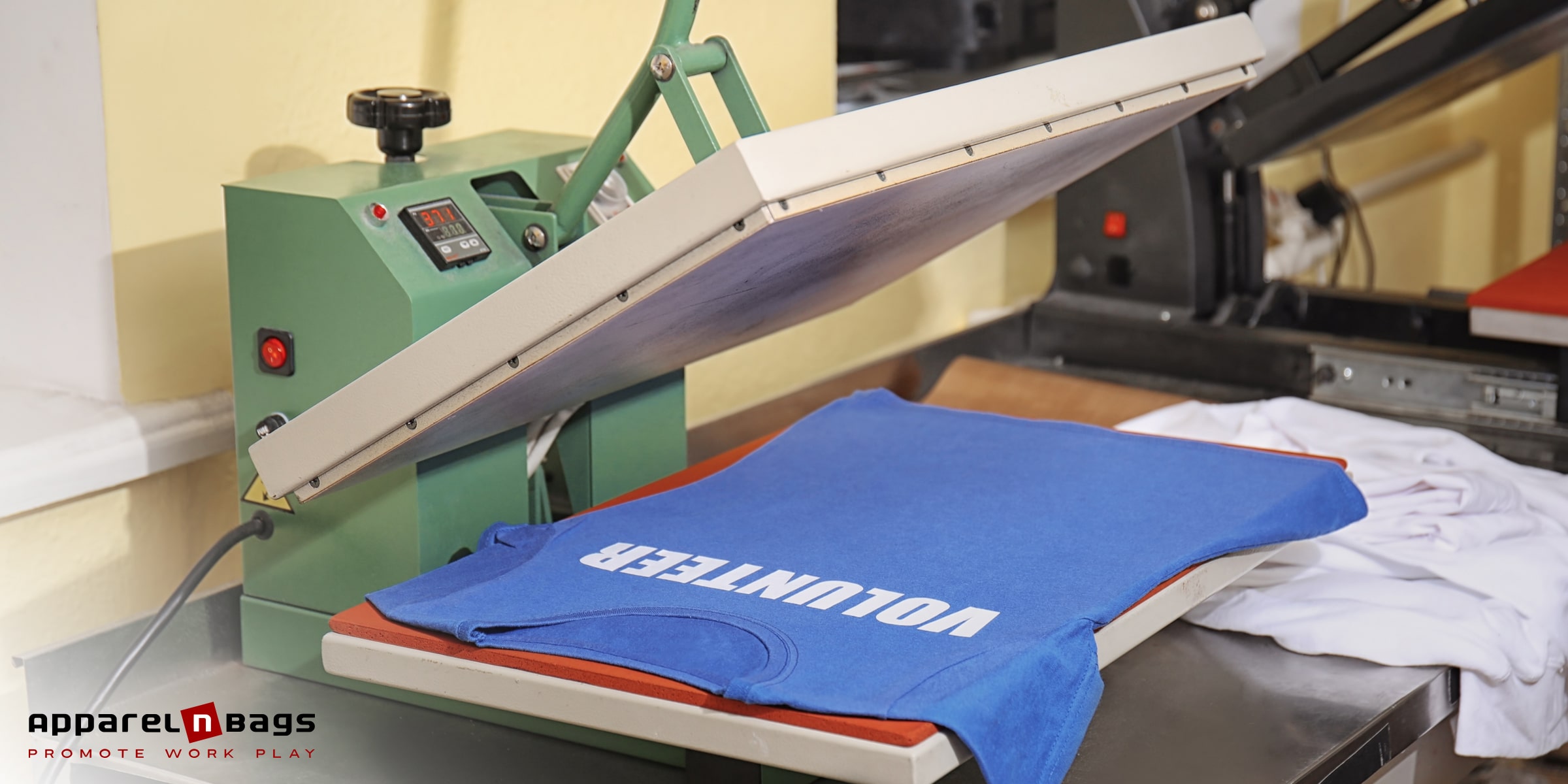
In recent years, sublimation printing has become more popular because of the high quality of the prints that it delivers. It is a popular printing method that uses heat and pressure to transfer designs from sublimation paper to fabric or other materials. Sublimation printing typically requires temperature ranging from 350 to 400 degrees to transfer designs effectively. In this process, solid ink particles are turned into gas, which then bonds with the material’s fibers to create vibrant, long-lasting designs.
How Sublimation Printing Works
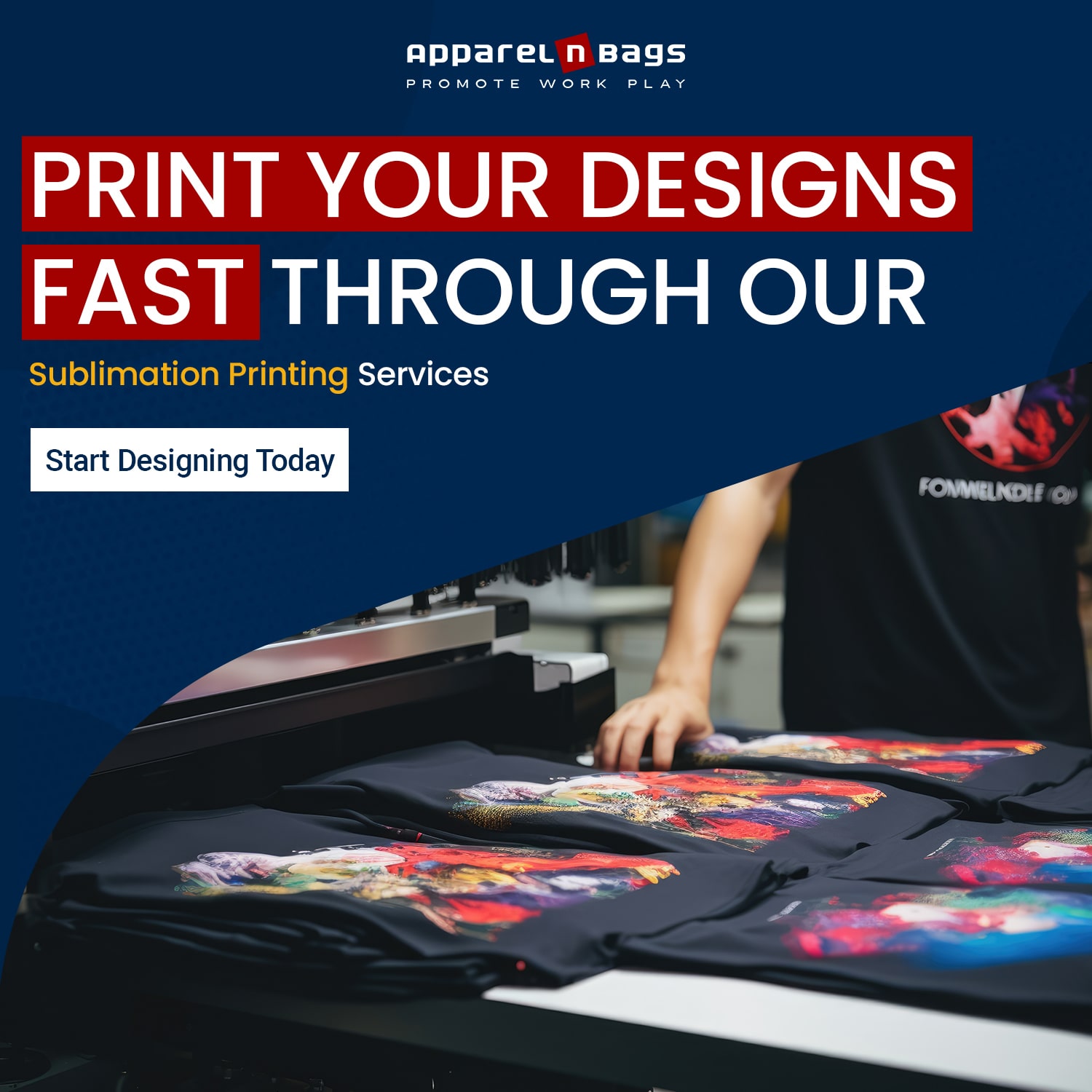
Sublimation printing transforms designs into vibrant, durable artwork by turning solid dye into gas. Here’s the step by step procedure of how sublimation printing works:
• Prepare the design: Upload your digital artwork to the sublimation printing software or platform used for preparing your design before transferring it onto the material.
• Select the material: Choose a material that is suitable for sublimation, like polyester, polyester-cotton blends or polyester fleece. These fabrics absorb the ink properly for vibrant results.
• Pick the colors: Make sure your design includes bright, vibrant colors like red, blue, yellow, and green for the best sublimation results.
• Set up the heat press: Place your material into the heat press machine, making sure it’s aligned and secure for even heat distribution.
Apply the design: Place the sublimation transfer paper onto the material. Set the temperature, pressure, and time on the heat press and start the process.
Sublimate the design: The heat press activates the sublimation process, turning the solid dye into gas, which bonds the ink to the material.
• Finish the process: After the transfer is complete, remove the material from the heat press. The ink has bonded with the fibers of the fabric during the sublimation process, making the design a lasting and integral part of the material. It won’t fade or peel over time like screen printing.
Benefits of using Sublimation
Using sublimation printing offers several key benefits for creating vibrant and durable designs. Here’s why it’s a great choice:
• Durable & Long-Lasting: The ink bonds directly to the fabric, resulting in designs that won’t peel, crack, or fade over time. This is a key advantage in the comparison of sublimation vs screen printing, where screen printing can lead to wear and tear over time.
• Vibrant Colors: Sublimation produces bright, full-color designs. This factor stands out in a sublimation and screen printing comparison, as sublimation printing results in more vibrant colors.
• Soft Feel: Since the ink becomes part of the material, the design doesn’t sit on top, leaving the fabric soft and comfortable. In sublimation vs screen printing, sublimation offers a smoother feel.
• No Limitations on Design Complexity: You can print intricate details, gradients, and full-color images with ease, making it ideal for complex logos and artwork. Sublimation also allows for more detailed and multi-colored designs without the limitations of multiple screens or color separations.
• Environmentally Friendly: Sublimation printing doesn’t require harsh chemicals or water, making it a eco-friendly option.
Screen Printing: How It Works, and Its Benefits
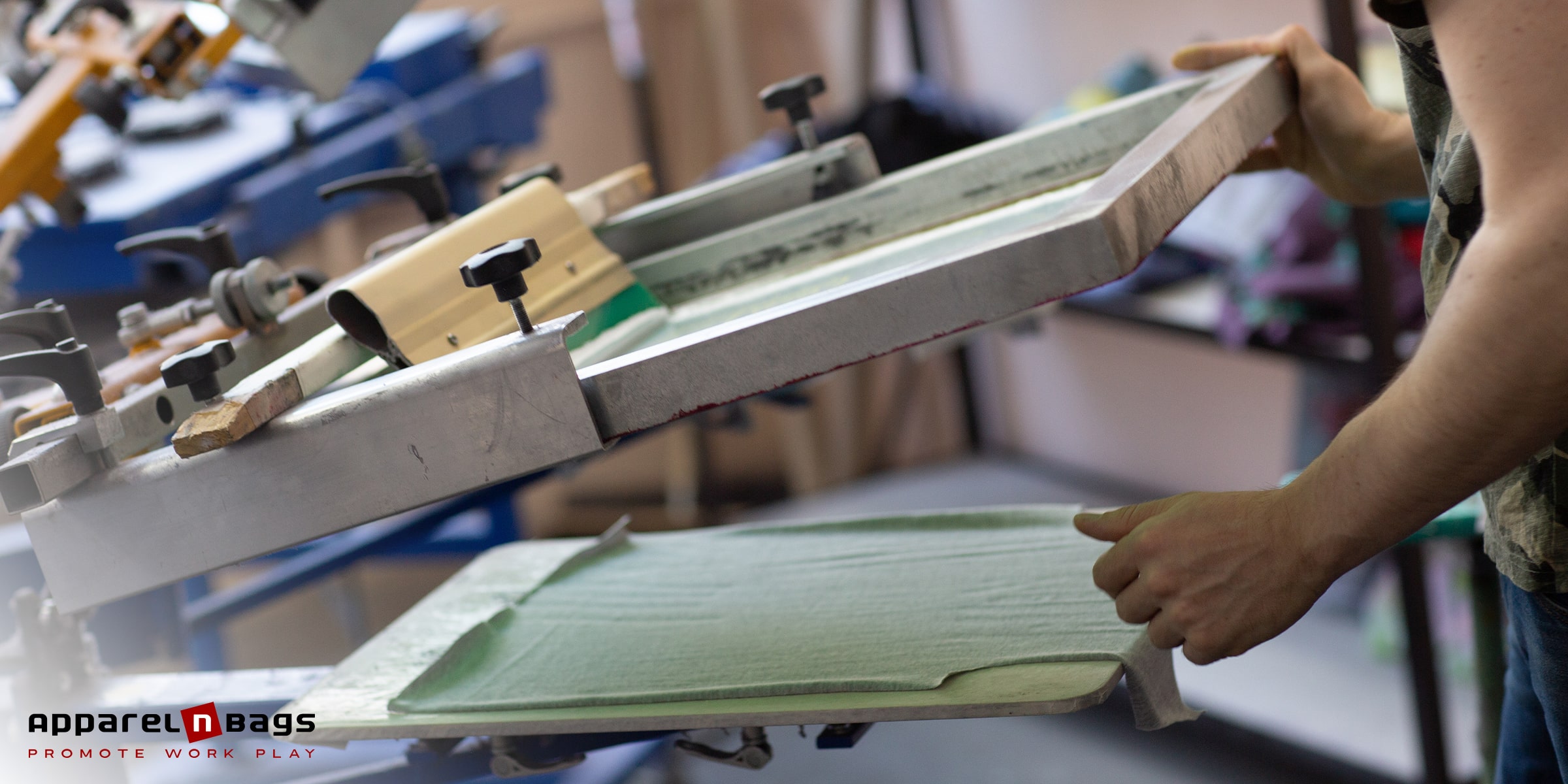
One of the main reasons screen printing is so popular is because of its ability to produce bright, vibrant prints, even on dark fabrics. When comparing screen printing vs sublimation, screen printing is best for simple designs.
Screen printing is a method where ink is pushed through a mesh screen to create a design. It’s widely used in many industries and is also known as silk screen printing. There are different ways to create the stencil for screen printing. This includes using masking tape or vinyl to block parts of the screen, painting the stencil with glue or varnish, or using a light-sensitive emulsion like a photo to create the stencil.
How Screen Printing Works
Here’s a detailed step-by-step procedure of how screen printing works:
• Prepare the design: Start by printing your design onto a clear acetate film. This is the template for your stencil.
• Choose the screen: Select a mesh screen that matches the design’s complexity and the fabric’s texture.
• Coat the screen: Apply a light-sensitive emulsion to the mesh screen. When exposed to light, the emulsion hardens, except where the design is.
• Expose the screen: Place the acetate sheet with your design on top of the emulsion-coated screen. Expose the emulsion to a high-intensity light. The light hardens the emulsion, leaving the areas covered by the design in liquid form, creating a stencil.
• Set up for printing: Place the fabric or object to be printed under the screen on the print board.
• Print the design: Apply ink to the top of the screen. The ink is then pushed through the stencil, transferring the design onto the fabric or object underneath.
Benefits of Using Screen Printing
Screen printing is an efficient method for creating vibrant canvases, banners, artwork, and textiles. It’s especially popular for producing unique clothes and products in large quantities.
• Wide Range of Colors: Screen printing is perfect for bright and vibrant colors like red, blue, yellow, green, and black. It also works well with specialty inks, such as metallic gold and silver or glow-in-the-dark options, enabling high-quality and vibrant designs.
• Cost-effective for Bulk Orders: Because screen printing involves setting up the screen for each color, it’s more practical for large print runs. Small quantities can be less cost-effective, and alignment or color bleeding issues may arise when printing multicolored designs.
• Suitable for Various Materials: Screen printing can be done on nearly any fabric or materials as long as it has a flat surface.
Sublimation vs Screen Printing: What Are the Differences?
Understanding the difference between screen printing and sublimation will guide you in making the right decision based on your design preferences, material type, and production scale. This will make sure your prints stand out and meet your business goals. Let’s explore the difference between sublimation and screen printing in detail so you can choose the best one for your brand.
Screen Printing vs Sublimation: Process
Screen printing involves creating a stencil (screen) and pushing ink through it onto the material. Each color in the design requires a separate screen, making it ideal for bold, simple designs. The ink sits on top of the material, giving a textured feel. This process is great for printing on apparel made with cotton, polyester, and cotton-poly blends, and is cost-effective for large orders.
Sublimation, on the other hand, uses heat and pressure to transfer dye directly into the material. The ink turns into gas and bonds with the fibers, creating smooth, vibrant designs that become part of the fabric.
Screen Printing vs Sublimation: Material Compatibility
Screen printing works best on cotton fabrics because the ink sticks well to the fabric fibers. Sublimation printing, on the other hand, is ideal for materials with a high polyester content, like polyester blends, polymer-coated fabrics, and light-colored polyesters. The more polyester in the material, the better the results. It also works well on neoprene, spandex, and nylon. Sublimation can even be used to print designs on ceramic or enamel mugs and cork-backed coasters. However, sublimation is not suitable for natural fabrics like cotton or silk, as the ink doesn’t bond well with these fibers.
Sublimation vs Screen Print: Color Limitations
Sublimation printing is great for designs with multiple colors and gradients. However, it works best on light-colored fabrics.
Screen printing, on the other hand, works best for simple designs with 6 to 8 colors. Each color is printed separately, which makes the process time-consuming. However, unlike sublimation, screen printing can be done on fabrics of any color.
Sublimation vs Screen Print: Durability
In screen printing, the ink stays on top of the fabric instead of sinking into it. With more colors, the print gets thicker. While plastisol ink makes the prints durable, they can crack, peel, or fade after several washes, which affects their longevity.
Sublimation, however, is much more durable. During the heat process, the ink bonds with the fabric fibers, making it resistant to fading, peeling, or washing out. When comparing screen printing vs sublimation, sublimation makes sure prints last longer and maintain their vibrant look for years.
Sublimation vs Screen Printing: Cost
The cost of each printing method depends on the equipment needed. Screen printing generally has lower start-up costs. You can use affordable DIY mesh screens or invest in more expensive equipment. However, adding extra colors or designs increases costs because it takes more time and effort.
Sublimation has higher start-up costs because it requires special equipment, including a sublimation printer, inks, transfer paper, graphic design software, and polyester t-shirts. This method also takes longer to produce each item since it uses a new sheet for every print, which can increase labor costs for businesses. However, sublimation allows printing multiple colors or designs in one step without extra charges.
Sublimation Print vs Screen Print: Color Reproduction and Detail
When it comes to color reproduction and detail, sublimation printing stands out for its ability to create vibrant, photo-quality designs with smooth gradients. It embeds the ink directly into the fabric, which helps achieve more precise details. Plus, it allows for a wide range of colors, making it ideal for complex and intricate design. However, it works best on light-colored polyester fabrics.
Screen printing, on the other hand, produces bold, vibrant colors even on dark fabrics. However, it is less suited for detailed designs or color gradients, as each color is applied separately, limiting the complexity of the final image. This makes it a better choice for simple designs.
When comparing sublimation print vs. screen print, sublimation is great for detailed designs and smooth color gradients, and on the other hand screen printing works best for bold and solid color designs.
Sublimation Printing vs Screen Printing: Eco-friendliness
Screen printing often uses plastisol inks, which are toxic and not eco-friendly. However, water-based inks can be used as a more environmentally friendly option. Screen printing is usually done in bulk, which can lead to leftover stock and wasted products if they are not used.
Sublimation printing uses non-toxic inks and requires less water compared to other dye transfer methods. This technique is ideal for on-demand production, reducing leftover stock. Any waste can often be recycled—for example, leftover fabric scraps can be repurposed into items like headbands.
Sublimation Printing vs Screen Printing: Print Complexity
Screen printing works best for simple designs with fewer colors. Creating detailed designs or gradients can be tricky because it requires expertise, chemicals, and time to make the screen print stencil.
Sublimation printing is better for intricate designs with complex gradients or digital artwork. You can create your design using software like Adobe Photoshop, then let the printer handle the rest. It’s an easier method for printing detailed and complex designs.
Which Is Better Sublimation or Screen Printing
Choosing between screen printing and sublimation can be tricky, as both have their own set of advantages.
It all depends on your preferences and what works best for your design and material. Sublimation is great for complex designs with vibrant colors and detailed artwork. It works the best on polyester fabrics and gives a smooth, long-lasting finish. On the other hand, screen printing is ideal for bold, simple designs, especially when you need to produce large quantities.
In the end, the choice is yours. You can experiment with screen printing and sublimation printing methods to see which one meets your requirements the best. Both types of printing methods have their advantages and challenges, so pick the one that best fits your project goals and the look you want to achieve.
Sublimation Printing vs Screen Printing FAQ’s