

The healthcare sector is competitive than ever before. Back in 1950, there were fewer than 50 health systems operating across the United States. Fast forward to today, that number has surged to over 400health care systems across the country. On top of that, the US is home to more than 6,000 hospitals and nearly 10 million medical professionals, including over 1 million physicians which mean a ratio of one physician for every 332 people in the country. As the healthcare sector grows, patients’ expectations have also changed over time with them seeking an exceptional care system and overall better experience. This shift has made healthcare marketing an essential component for any healthcare organization or healthcare service provider; and, well-designed healthcare marketing strategies can make all the difference.
A solid healthcare marketing strategy helps enhance the patient experience as well as strengthens patient loyalty, attracts new patients, and builds the overall brand of the healthcare provider. When done correctly, healthcare marketing can also serve as a powerful revenue-driving tool that contributes directly to your healthcare business growth and overall success.
In this blog, you will learn “what is healthcare marketing”, importance of healthcare marketing strategy, and provide a step-by-step guide for developing a healthcare marketing plan. The blog will provide you with valuable insights into the healthcare marketing strategies that can help you attract and connect with patients and build a strong brand in the highly competitive healthcare sector.
What Is Healthcare Marketing?
Healthcare marketing is the strategic approach used by organizations and professionals in the healthcare sector to promote their services to their target audience. It involves a mix of traditional advertising, digital marketing, and community outreach to build brand awareness and trust.
Healthcare marketing is essential with over 70% of patients turning to online platforms to research medical conditions and services, and to find the best healthcare providers. Effective healthcare marketing strategies include promoting your practice through social media, optimizing your healthcare website on search engines, and adding patient testimonials to your website and other social media platforms to increase credibility and improve patient acquisition and retention.
When done right, healthcare marketing can:
- Improve the patient experience
- Strengthen your brand identity
- Enhance your online reputation
- Increase referrals from local physicians/practitioners
- Bring in more qualified leads and boost revenue
- Keep patients engaged throughout their journey
- Assess your performance and adjust your strategy accordingly
- Give you a competitive edge in attracting patients in a crowded market
- Grow your patient base, retain current patients, and build loyalty in your community


Types of Marketing in Healthcare
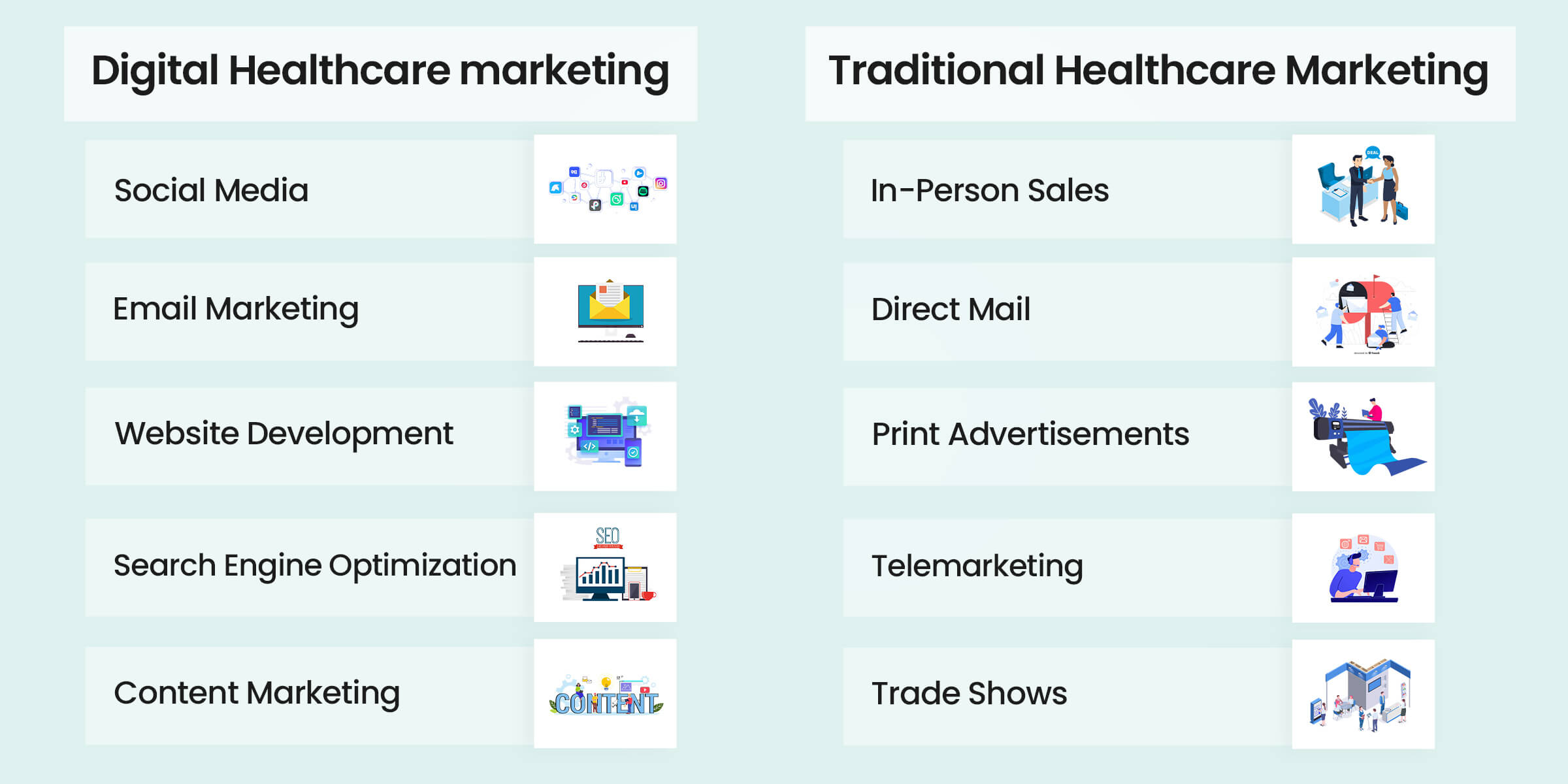
Healthcare marketing can be divided into traditional and digital forms. Traditional healthcare marketing includes methods like in-person sales, direct mail, print ads, telemarketing, trade shows, word-of-mouth, and television or radio ads. Whereas, digital marketing in healthcare takes advantage of the internet such as social media, email marketing, websites development, search engine optimization, pay-per-click ads, content marketing, influencer marketing, video ads, and internet radio or streaming service ads.
The major benefit of digital marketing in healthcare over traditional healthcare marketing is the ability to easily track its effectiveness. Unlike traditional healthcare marketing methods, which provide little insight into how many people actually engage with the material (such as a mailed postcard), digital health care marketing offers valuable data on metrics like clicks, views, and conversions, making it much easier to measure success.
Here’s how both traditional and digital marketing for healthcare methods could be used:
Traditional Healthcare Marketing Example:
The clinic might send out a direct mail postcard to residents within a 10-mile radius. The postcard includes information about the clinic’s services, a special promotion, and a phone number to schedule a consultation. While this method may reach a broad audience, the clinic has no clear way to track how many recipients actually had a look into the mail postcard and made an appointment because the response is based solely on phone calls or visits.
Digital Healthcare Marketing Example:
- Now, the clinic also invests in digital marketing through various online channels:
- They run Facebook ads targeting people in the local area who are seeking healthcare services. The ad includes a link to a dedicated landing page.
- They also run Google ads that appear when someone searches for “particular healthcare service” or related terms.
- On their website, they publish blog posts and educational content about health care service, which is optimized for SEO to drive organic search traffic.
- Through email marketing, they send personalized messages to previous patients, reminding them of new treatments or special promotions.
The key advantage of this healthcare digital strategy is that the clinic can track metrics like:
- Click-through rates (CTR) on the ads
- Website visits and user behavior (such as time spent on the site or which pages are most visited)
- Email open rates and clicks on email links
- This data allows the clinic to assess the effectiveness of each ad or content piece, adjust their healthcare marketing strategies, and ultimately improve their marketing efforts with measurable results.
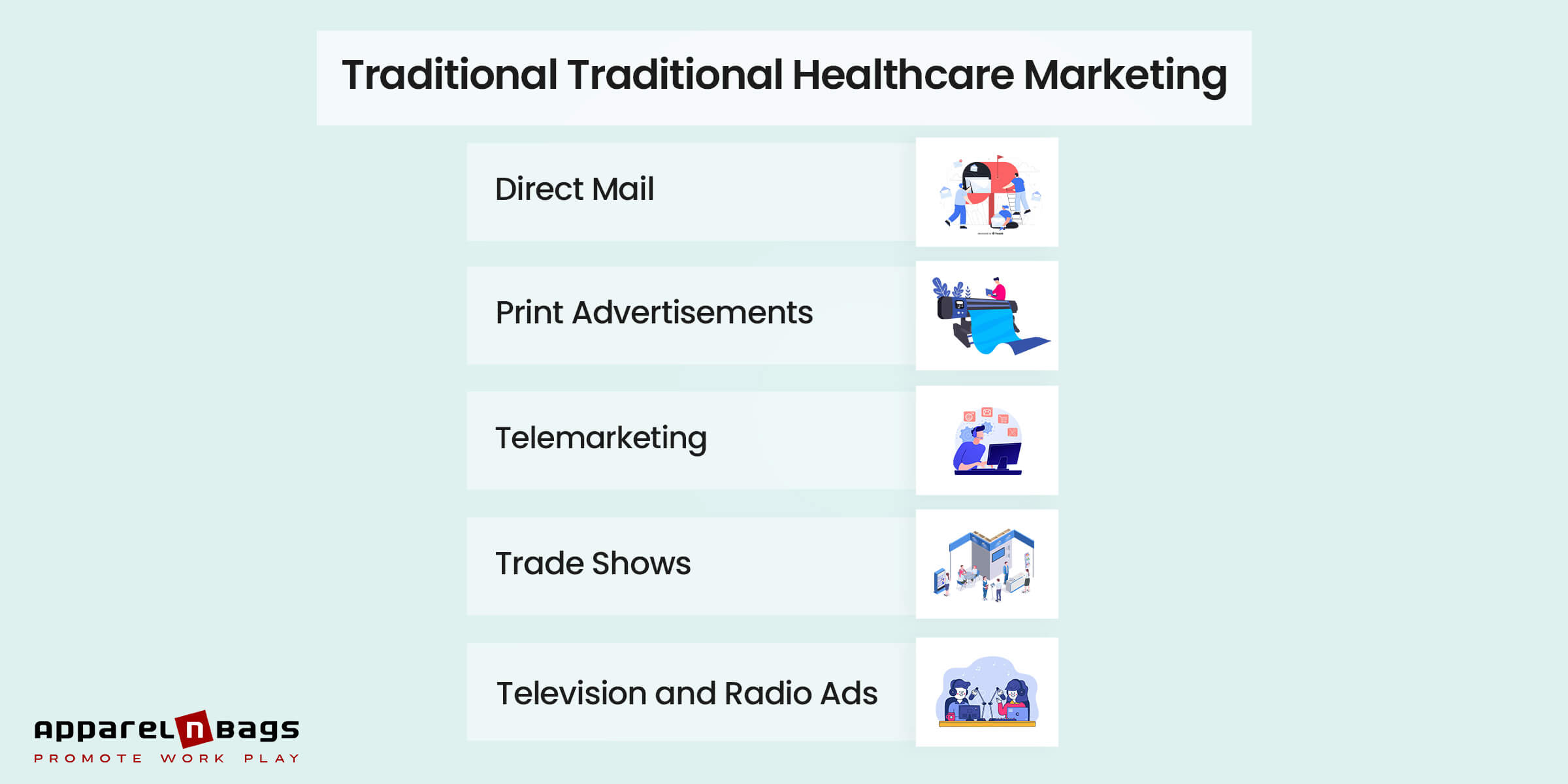
Traditional Healthcare Marketing Methods
1. Direct Mail
Direct mail is a traditional healthcare marketing tactic where promotional materials, such as brochures, postcards, or flyers, are sent to potential customers’ homes or offices. In healthcare, this could include sending information about services, health tips, or promotions for medical products. The benefit of direct mail is its ability to target specific demographics, especially older populations who may not engage with digital ads.
2. Print Advertisements
Print advertisements, which include newspaper ads, magazine placements, and flyers, have long been an effective healthcare marketing strategy. These advertisements can reach a wide audience, especially when placed in local or specialized publications. They are effective for promoting local healthcare services, medical products, or public health campaigns. Print ads are also useful for targeting specific geographic areas and demographic groups, such as senior citizens or those interested in health and wellness.
3. Telemarketing
Telemarketing in healthcare is another healthcare marketing strategy for reaching out to potential patients via phone. It can be used to offer discounts, share services, remind patients of upcoming appointments, offer new healthcare services, or promote special events. Although it’s less popular in the digital age, it can help in creating a personal connection with your patients and informing them about relevant healthcare options.
4. Trade Shows
trade shows in healthcare are important for introducing new medical technologies, services, or health initiatives. These events offer healthcare professionals the opportunity to grow their network, learn about new trends, and discover innovative solutions. Additionally, they help build brand awareness for healthcare professionals and credibility in the healthcare sector.
5. Television and Radio Ads
Television and radio ads are a traditional form of advertising that allows healthcare organizations to reach a mass-market audience. These ads are typically used for public health campaigns, healthcare services, or to promote specific products. The visual and emotional power of TV ads allows healthcare brands to connect with viewers on a deeper level. However, the challenge with radio ads is the lack of visual content, so the messaging must be clear, concise, and engaging to capture the audience’s attention.
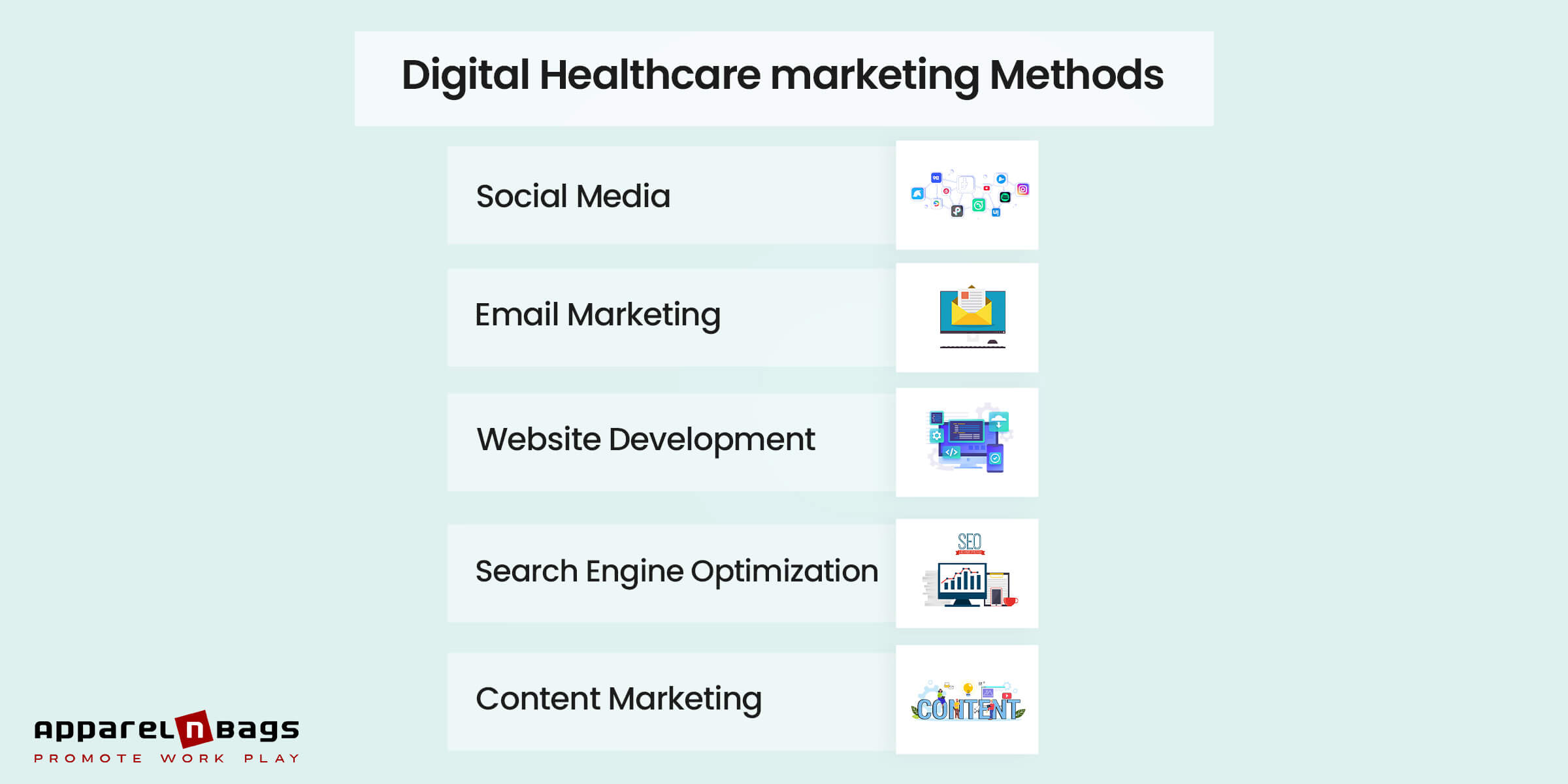
Digital Healthcare Marketing Methods
1. Social Media
Social media marketing is one of the best marketing strategies for healthcare that utilizes platforms like Facebook, Instagram, X (formerly Twitter), YouTube, and TikTok to promote healthcare services, engage with patients, and build a community.
With over 1.6 billion users linked to small businesses through Facebook, it’s a valuable platform for small to midsize healthcare businesses or healthcare professionals looking to boost their online presence. However, relying solely on organic social media isn’t enough as the competition is getting high in the healthcare sector. Paid social media advertising is also recommended for reaching a broader and more targeted audience and attracting potential patients that are actively searching for your services.
Keep in mind that paid social media marketing involves more than just clicking the “Boost Post” button on your business page.
Like PPC or display ads, it also requires careful strategy, planning, and budgeting to ensure your ads effectively reach the right audience at the right time and deliver better outcomes.
2. Email Marketing
Email marketing is another most effective healthcare marketing strategy, helping in staying connected with patients and other key contacts. Regular email updates keep recipients informed about your recent services or healthcare offerings while positioning your small healthcare facility as a trusted name in this growing sector. This also helps build brand recognition, which is especially valuable when patients need to make quick decisions about their healthcare providers.
The most successful healthcare email campaigns feature mobile-friendly designs, compelling headlines, and patient-focused messaging that offers real value. Make sure to avoid overly promotional language; instead, provide useful information with a clear call to action. This approach will naturally lead to higher engagement and conversions eventually.
3. Develop a Responsive Website
Most patients now search for their healthcare provider online, making it essential to have a website that is both responsive and user-friendly. A responsive website automatically adjusts to fit the screen size of any device, whether it’s a computer, tablet, phone, ensuring a smooth experience across all platforms.
Google prioritizes user experience, and since September 2020, it has adopted a mobile-first indexing approach for all websites, including healthcare sites. This means that responsive websites are ranked higher than non-responsive ones.
However, simply having a responsive site isn’t enough. It’s important to ensure that your text, images, videos, and links load correctly and quickly, and that all meta elements (such as titles and descriptions) and structured data are consistent across all types of devices.
A responsive healthcare website also includes factors like page load speed, the tone and design of the content, site functionality, and the ease with which users can complete tasks – such as scheduling an appointment with the healthcare professional. A well-designed and fully functional website not only improves the user experience but also increases the likelihood of converting visitors into patients.
Healthcare marketers who analyze online behavior have found that consumers are less patient with slow loading times than ever before.
In fact, a delay of just 3 seconds can cause you to lose a potential patient.
4. Search Engine Optimization
Every clinic or healthcare facility aims to appear on the top of search engines like Google when a patient searches for relevant services. However, achieving this ranking is no simple task. For a website to perform well on Google, it must be fully optimized, consistently featuring informative, real-time, and meaningful content, strategically incorporated keywords, meta tags and descriptions, and content that aligns with what patients are searching for. An effective SEO practice is one of the best marketing strategies for healthcare organizations or small healthcare clinics.
Remember, SEO is far more intricate than many people realize.
Simply repeating the phrase “dentist” a hundred times across your website won’t guarantee you top ranking on Google.
Effective SEO requires using the right keywords and phrases that help Google understand the purpose of your healthcare content. By focusing on organic SEO strategies, you can rank for relevant search terms related to your field, such as specific treatments, health concerns, or specialized services, rather than just broad terms.
5. Pay-Per-Click Ads
PPC (pay-per-click) is one of the most cost-effective marketing strategies in healthcare where businesses pay each time a user clicks on their online ads It’s a cost-effective way to manage your marketing budget since you only pay for clicks from interested leads. Healthcare organizations or clinics can boost the value of their PPC ads by tracking appointments made by potential patients who clicked on the ads.
PPC ads, or paid search ads, are one of the highly targeted healthcare marketing techniques and appear at the top of search engine results for specific keywords. With paid search, you have control over your budget and can decide how much to spend to maintain visibility at the top of search results. This makes it easy to measure your ROI (return on investment), whether it’s through PPC ads or display ads on other websites.
Although PPC offers significant benefits, such as increased visibility, it does come with challenges, including Health Insurance Portability and Accountability Act (HIPAA) compliance and restrictions on remarketing. However, the visibility gained through pay-per-click ads is crucial for small healthcare organizations looking to stand out in a competitive online market.
6. Content Marketing
Content marketing in healthcare is a powerful healthcare marketing tactic for helping health professionals connect with patients and retain them, build trust by offering accurate health information, and enhance brand visibility. Medical organizations can leverage this marketing strategy for healthcare to educate their audiences, position themselves as industry experts, and foster long-lasting relationships with patients and other healthcare professionals. Blog posts and guest posts writing, eBooks, email marketing, case studies, newsletters, publications and infographics are a few effective types of content marketing in healthcare.
According to a Semrush survey, 99% of healthcare companies reported positive outcomes from their content marketing initiatives. This strategy enables small to mid-size healthcare clinics to engage and build string connections with prospects and customers.
7. Influencer Marketing
Influencer marketing in healthcare has become a popular strategy where small to mid-size businesses leverage individuals with a strong social media presence to build trust and amplify their brand message. In the healthcare sector, this marketing strategy for healthcare can also be highly effective, as it allows brands to reach trusted voices within health and wellness communities.
A great example of influencer marketing is Patagonia’s Worn Wear campaign, which encourages customers to buy used gear and repair their old items rather than purchasing new ones. The brand collaborated with influencers who are passionate about sustainability and environmental conservation, asking them to share their personal stories about extending the life of their gear.
This strategy helped drive awareness around the environmental impact of overconsumption, leading to an increased demand for Patagonia’s second-hand clothing and repair services.
This type of influencer partnership could easily be adapted to healthcare marketing, where influencers could be encouraged to promote healthy living products or practices while raising awareness about public health issues.
8. Video Ads
Video content is a powerful marketing strategy in healthcare, due to its proven ability to capture audience attention effectively. Studies show that 90% of companies utilizing video content have seen a positive impact on audience decision-making. In the healthcare space, video can serve multiple purposes, such as providing educational guides, offering a behind-the-scenes look at healthcare facilities, and sharing patient stories or testimonials. Since videos deliver visual evidence, they tend to be highly credible and engaging, making them an ideal format for communication.
Here are several ways to incorporate video into your health care marketing strategy:
- YouTube: As the second largest search engine globally, YouTube is an excellent platform for sharing healthcare videos and educational content including tips for healthy lifestyle and more.
- Social Media: Every major social media platform now supports video uploads, because videos often receive higher engagement and priority in algorithms, especially on platforms like Facebook.
- Blog Posts: Integrating video into blog posts helps illustrate the content and can enhance SEO performance for a healthcare website.
- Website: Video landing pages provide a rich experience for visitors, showcasing your healthcare services or products in a compelling way.
- Email: Adding the word “video” to your email subject line can increase open rates by up to 19%, making it a simple yet effective healthcare marketing tip to boost engagement.
Why Is Healthcare Marketing Important?
People most of the time search online when looking for a physician or a healthcare service provider; and, with so many options available, it becomes difficult for service providers to rank their services or offerings on top of search engines. Hence, it becomes a must for them to learn how to market healthcare services effectively to reach to their audience and gain new customers while retaining existing ones.
A strong healthcare marketing plan can help small to mid-size businesses and professionals to position themselves as the most trusted and credible service provider in this highly competitive sector. Make sure to design effective marketing strategies in healthcare which include a variety of elements, including a user-friendly website, consistent branding, SEO (search engine optimization), paid advertising, and social media engagement. These healthcare marketing tactics not only help practices attract new patients but also ensure they retain their existing ones.
Additionally, incorporating promotional products like custom drinkware, custom pens, personalized notebooks, custom branded t-shirts, and other branded items into your strategy can provide an effective and cost-friendly way to enhance your brand presence and patient loyalty. These items can serve as thoughtful reminders of your healthcare service, making it more likely that patients will return and recommend your practice to others.
However, best healthcare marketing must adhere to specific regulations to ensure patient privacy and safety. Key regulations include:
- HIPAA (Health Insurance Portability and Accountability Act): Sets guidelines for the sharing of patient information and electronic billing.
- GDPR (General Data Protection Regulation): Protects patients’ personal data by regulating how healthcare providers and marketers use their information.
- CAN-SPAM Act (Controlling the Assault of Non-Solicited Pornography and Marketing Act of 2003): Governs email marketing, specifying what information can be shared, and ensuring patients can opt-out of communications.
By understanding and adhering to these regulations, healthcare marketers can create the best healthcare marketing strategies that build trust with patients while growing their practices.
Benefits of Healthcare Marketing

Effective marketing strategies in healthcare offer numerous benefits, both from a business standpoint and in fostering better connections between patients and healthcare services providers. A few benefits of healthcare marketing are mentioned below:
- Attracting and drawing in new patients to a healthcare facility
- Reaching potential customers at the right time with the right info
- Providing patients with timely updates and relevant information
- Expanding the reach of healthcare organizations or service providers
- Building and strengthening brand awareness in the healthcare sector
- Improving patient trust and loyalty through consistent communication
- Enhancing patient engagement to boost retention rates and attract more qualified leads
- Optimizing online reputation management by responding to feedback and reviews promptly
- Track, analyze, and reshape healthcare marketing strategies and healthcare marketing plans based on clients’ feedback and reviews
Healthcare Marketing Strategies FAQ’s