

Choosing between embroidery vs. screen printing for your custom apparel is an important decision. Both methods offer different results for your custom projects. Embroidery is suitable for work uniforms, sports uniforms, and business casual outfits, giving your apparel a branded touch. Screen printing, on the other hand, is ideal for athletic wear, casual wear, and primarily t-shirts, giving your clothing a personalized appeal.
The blog will let you learn the key differences between embroidery vs. screen printing, so you can decide which method best suits your personal style or business branding requirements.
What Is Embroidery Printing: How It Works, and Its Benefits
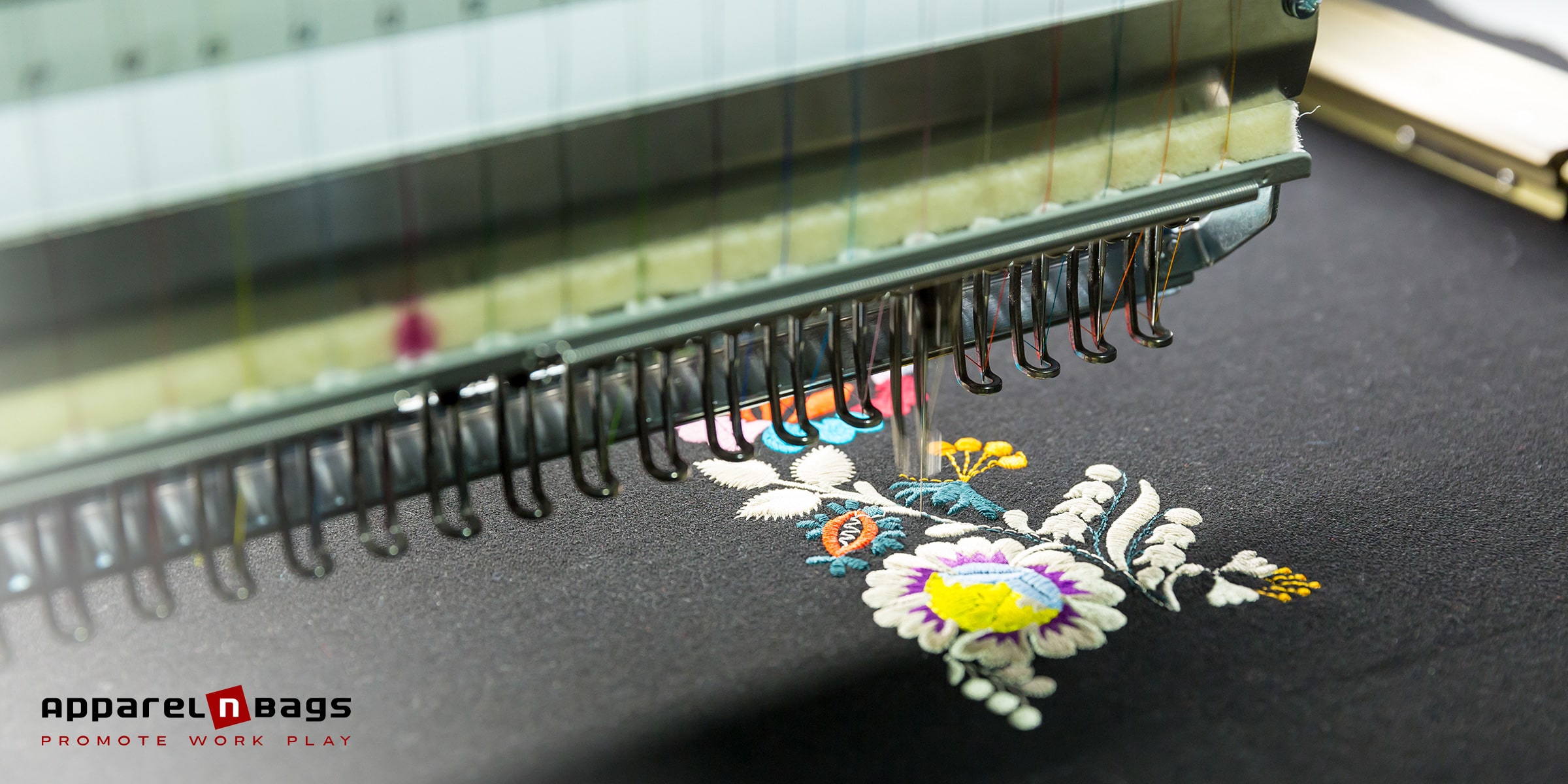
Embroidery is the process of decorating fabric using needle and thread. Originally done by hand, today’s embroidery often uses advanced machines, making it faster and perfect for detailed designs or large orders.
You can still enjoy traditional hand embroidery, experimenting with different thread types, colors, and embellishments like beads or sequins. Whether done by hand or machine, embroidery offers unique ways to print your designs beautifully with texture and style.


How Embroidery Printing Works?
Embroidery printing transforms simple materials into textured designs. Here’s how it works step by step:
- Prepare the design: Upload a high-quality digital version of your logo or text. The embroidery machine processes this file into a stitch-ready format, determining stitch type, sequence, colors, and settings. A well-prepared file makes sure accurate results.
- Select the fabric: The fabric’s texture and thickness impact the final design. Choose a material that works well with embroidery to avoid thread breakage or uneven stitching.
- Pick the colors: Thread colors define the look of your design. Choose shades that match your logo or design idea for the best outcome.
- Choose the embroidery style: Decide between flat embroidery, 3D puff, or other styles as per your certain requirements.
- Set up the fabric: Secure the fabric in the embroidery machine’s frame to keep it in place during the stitching process.
- Start designing: Thread the machine, adjust the speed, and begin stitching. The machine works through the design step by step until the embroidery is complete.
Do You Know?
➣ Embroidery has been around for over 2,000 years, with roots in ancient China and Egypt.
➣ Modern embroidery machines can create up to 1,000 stitches per minute with stunning accuracy.
ApparelnBags has successfully served 10,000+ customers, offering expert embroidery services. This is your chance to design your brand to connect with your audience and grow your business!
Benefits of Using Embroidery Printing
Embroidery is one of the most common ways to customize apparel. Here’s why embroidery is an excellent choice when differentiating both embroidery screen printing methods:
- Embroidery works well for all order sizes. You can order a few pieces for gifts or a large batch for business promotions. It’s a good option to fit every budget.
- Modern embroidery machines make the production process quick and efficient. You can expect your items to be ready for shipment in just a few days, even for larger orders.
- Embroidery allows up to 8 thread colors, so your designs can be bold and colorful. These colors add detail and vibrancy to logos, text, or any custom design.
- One of the main benefits of embroidery is its professional look. Stitched designs have a high-quality and smart finish that stands out compared to printed designs.
- Embroidery is also highly durable. The designs resist fading, peeling, or wearing out, which make sure they stay same even after repeated use.
What Is Screen Printing: How It Works, and Its Benefits
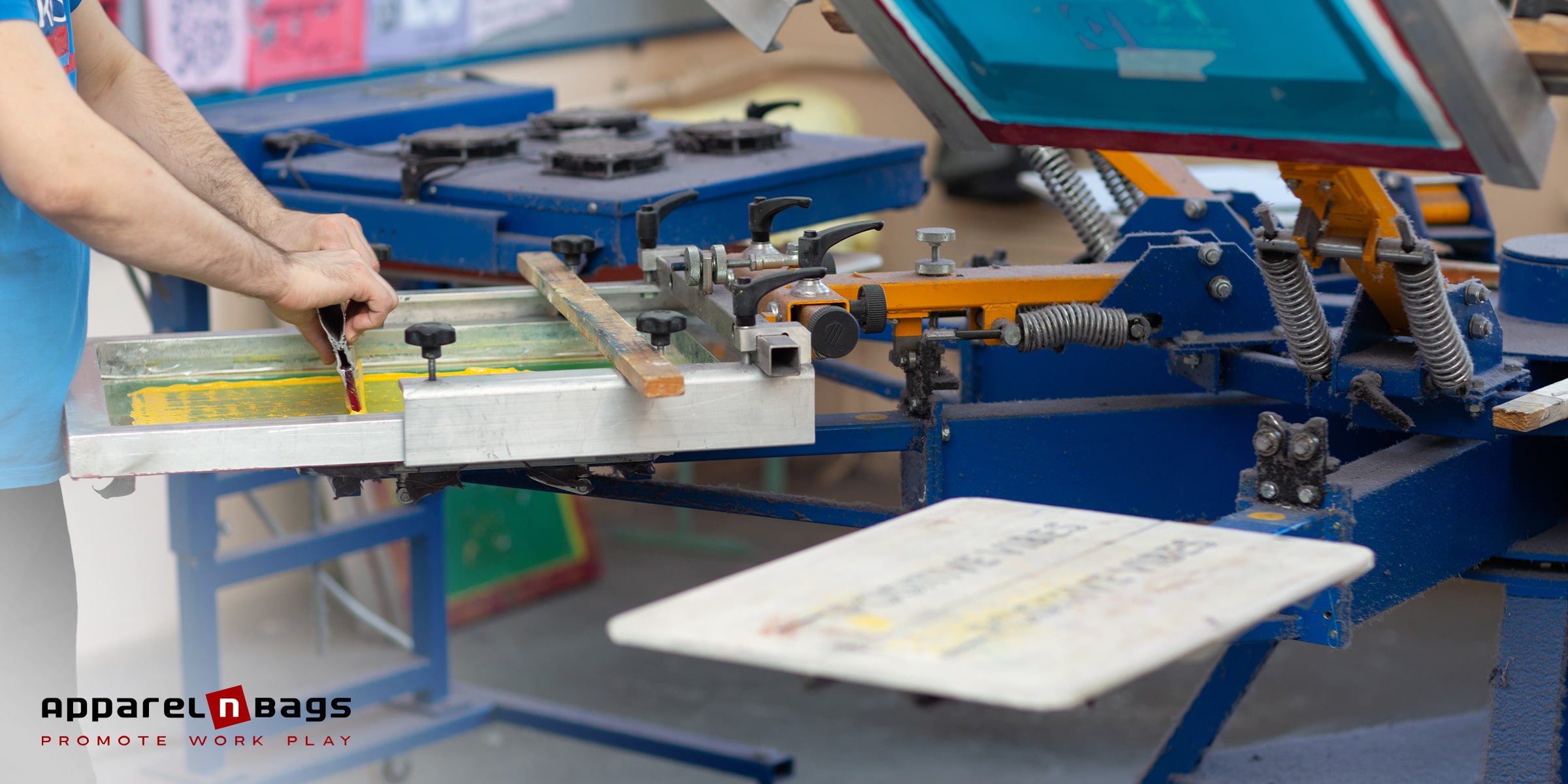
Screen printing is an old printing method that dates back to the Song Dynasty (960–1279 AD) in China, where the first silk-screening techniques were developed. It involves using a mesh screen, ink, and a stencil to transfer designs onto various materials.
Screen printing is now widely used in the fashion and printing industries. It produces vibrant, long-lasting prints on fabrics, posters, and promotional products. This method is especially popular for bulk orders, making it a go-to choice for creating custom apparel, such as t-shirts, hoodies, polo shirts, and more.
When comparing screen printing & embroidery, screen printing stands out for its bold colors and ability to cover larger areas with detailed designs. It’s a reliable option for producing high-quality prints that are made to last.
How Screen-Printing Works?
To help you understand how screen-printing works, let’s break it down step by step.
- Design preparation: The first step is preparing your design and selecting the right inks for the print. The design is carefully planned out before printing.
- Screen creation: A screen is created for each part of your design. The more complex the design, the more screens you will need for each color or layer. A light-sensitive emulsion is applied to the mesh screen and left to dry in a dark room.
- UV light exposure: After the emulsion dries, the design paper is placed on the screen, and the screen is exposed to UV light. This process hardens the emulsion where the design is, allowing ink to pass through the open areas.
- Ink transfer: The screen is then placed on the fabric, and ink is spread across it using a tool called a squeegee. The ink passes through the screen and creates the design on the fabric.
- Layers: For designs with multiple colors, the process is repeated for each color layer. Each layer must be dried before applying the next to avoid mixing colors.
- Drying time: Finally, the ink is left to dry completely, ensuring the print is durable.
Screen printing is a detailed process that takes time, but the results are worth it. The vibrant colors and long-lasting prints make it a popular choice for custom apparel and promotional products.
Benefits of using Screen Printing
Screen printing has been a popular method for many years, and it continues to be highly effective for producing vibrant, durable prints. Here are the benefits of using screen printing for your custom apparel projects:
- It’s a cost-effective choice for businesses looking to keep customization costs low. Some items can be designed for as little as one dollar each, making it a budget-friendly option for large orders.
- One of the main advantages of screen printing is quick production. With the right setup, your order can be ready and shipped out within a week.
- Screen printing is also highly versatile. It can be used to print on a wide range of products and materials, including fabric, plastic, wood, metal, glass, and ceramic, allowing for endless customization possibilities.
- The method is scalable, too. Customize a small item like a wine glass or a large one like a yard sign; screen printing can adjust to fit any size. The design will always be clear and easy to read.
In screen printing embroidery comparison, screen printing offers a long-lasting finish. Once the ink has dried, it’s permanently bonded to the material. With proper care, the design stays same and doesn’t fade, even after repeated washing.
Embroidery vs. Screen Printing: Key Differences
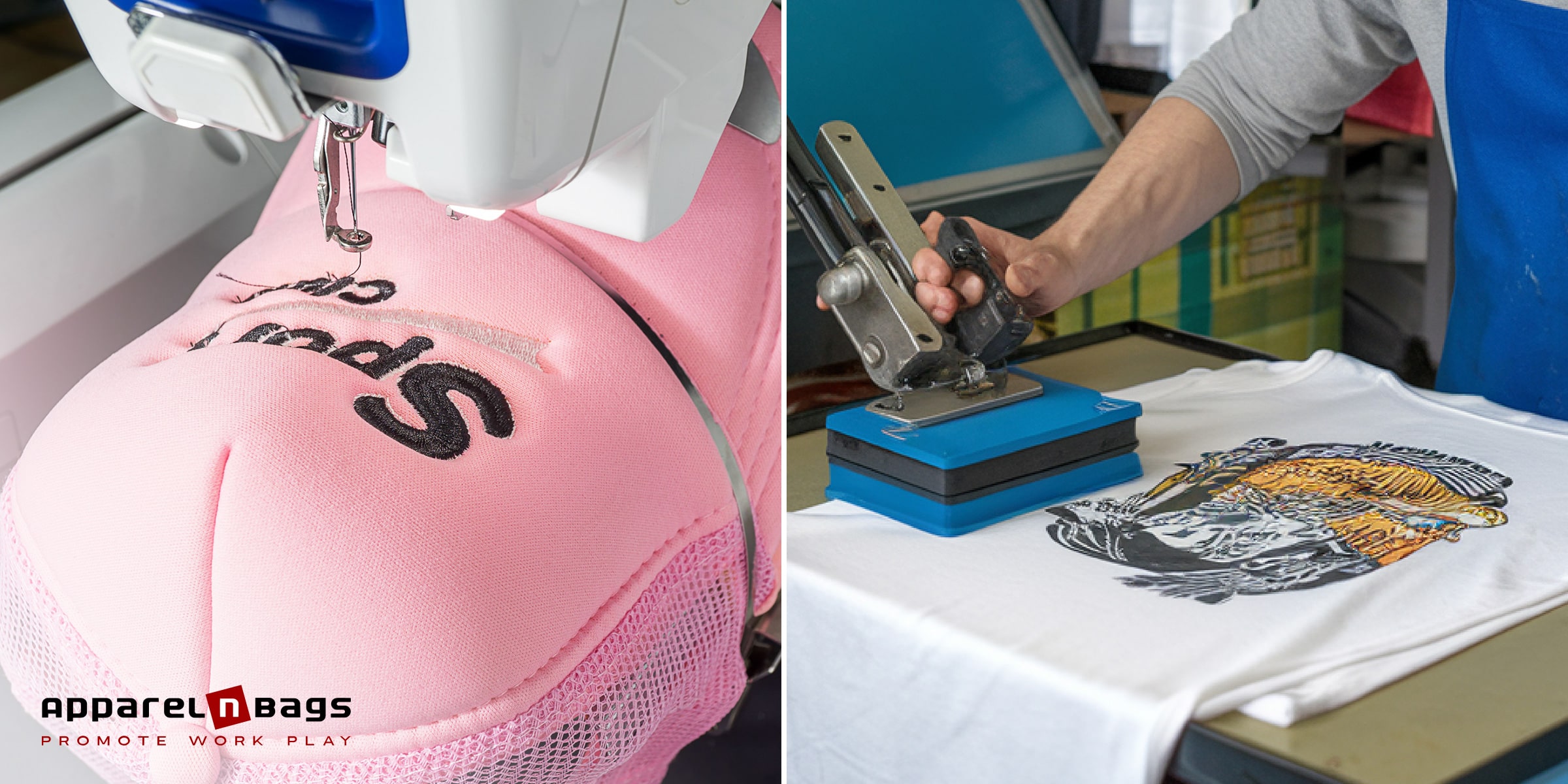
Now, let’s take a closer look at the key differences between embroidery and screen printing. As we go through each method, consider the details that can help you decide which one is best for your brand
Embroidery vs. Screen Printing: Durability
Embroidery offers long-lasting durability, with tightly stitched threads that resist fading even after multiple washes. It’s perfect for high-quality, professional-looking designs on apparel and accessories. However, embroidery can be more expensive and is better suited for smaller, simpler designs.
Screen printing, on the other hand, is ideal for larger orders and vibrant, detailed graphics. It’s a cost-effective option, but the print quality may fade over time, especially with frequent washing. It works well for bold, colorful designs on various materials. Choosing between embroidery vs. screen printing depends on your preferences for durability, design complexity, and budget.
Embroidery vs. Screen Printing: Texture
Embroidery adds a raised texture to your designs, depending on the type of stitch you choose. It’s perfect for small and detailed designs, like logos. Embroidery is often used for classic, preppy styles, uniforms, or luxury clothing.
If you want a smooth and eye-catching design, screen printing is a better choice. It works well for street wear, casual wear, or sports apparel, giving them a personalized appeal. Although it doesn’t offer the same raised texture as embroidery, layering ink in screen printing can create a slightly textured effect.
Embroidery vs. Screen Printing: Color Variety
Embroidered designs can have limitations in color choices, depending on the production facility. Unlike screen printing, where inks can be mixed, embroidery relies on pre-existing thread colors. This makes it better for designs that fit within the available color options.
Screen printing offers a wider range of colors because inks can be mixed to create custom shades. It’s great for creating various visual effects like gradients, shading, and blending, giving you more flexibility with colors than embroidery.


Embroidery vs. Screen Printing: Fabric Compatibility
Embroidery works well on many fabrics like linen, denim, crepe, and velvet. This makes it a great choice for products such as caps, scarves, and polo shirts. However, since embroidery involves making tiny needle holes, it’s not ideal for waterproof materials like rain jackets or diving suits.
Screen printing isn’t suitable for stretchy or uneven fabrics like spandex, Lycra, or polyester with uneven textures, as these can affect the quality of the print. It works best on natural fabrics like cotton, linen, or fabric blends, and commonly used for t-shirts and hoodies made with these materials.
Embroidery vs. Screen Printing: Cost Comparison
When it comes to customizing clothing or accessories, cost is a major concern for small business owners. The cost of embroidery or screen printing can vary based on factors like design complexity, location, design size, and the type of clothing used.
Embroidery often has a standard fee, which means the number of colors in the design won’t affect the price. Screen printing, however, gets more expensive as the number of colors increases since each color requires a separate screen. Hence, screen printing is considered more reliable and affordable for large orders.
Embroidery vs. Screen Printing: Small Details
Embroidery is great for small, detailed designs like a logo or text because it uses thread and needle, offering more precision for tiny elements, such as the curve of the letter “S.” It’s ideal for smaller designs.
Screen printing works well for larger designs and can replicate the overall look accurately. However, on closer inspection, screen printing might not capture every small detail. For example, if your design includes splashes of color, each print may look slightly different, with the spots and drops varying from garment to garment.
Embroidery vs. Screen Printing: Order Quantity
Embroidery is often the preferred choice for smaller order quantities because it involves lower setup costs and can be done quickly with minimal preparation. On the other hand, screen printing is generally more cost-effective for larger orders due to the higher setup costs involved. These costs, which include creating the screens and preparing the design for printing, are distributed across a larger number of items, making the cost per unit significantly lower as the order size increases. As a result, while screen printing may have a higher upfront cost for smaller runs, it becomes much more economical for bulk orders.
Embroidery vs. Screen Printing: Care and Maintenance
Embroidered garments need extra care due to their detailed threads and patterns. Make sure to turn the clothing inside out to protect the design and avoid washing it with sharp objects that could damage the stitching.
For screen printed apparel, avoid high temperatures and harsh detergents, as they can harm the print. To prevent staining, wash colors and whites separately. Embroidery is better for frequent washing and drying than screen printed clothing.
Screen Printing vs. Embroidery: Which One to Choose?
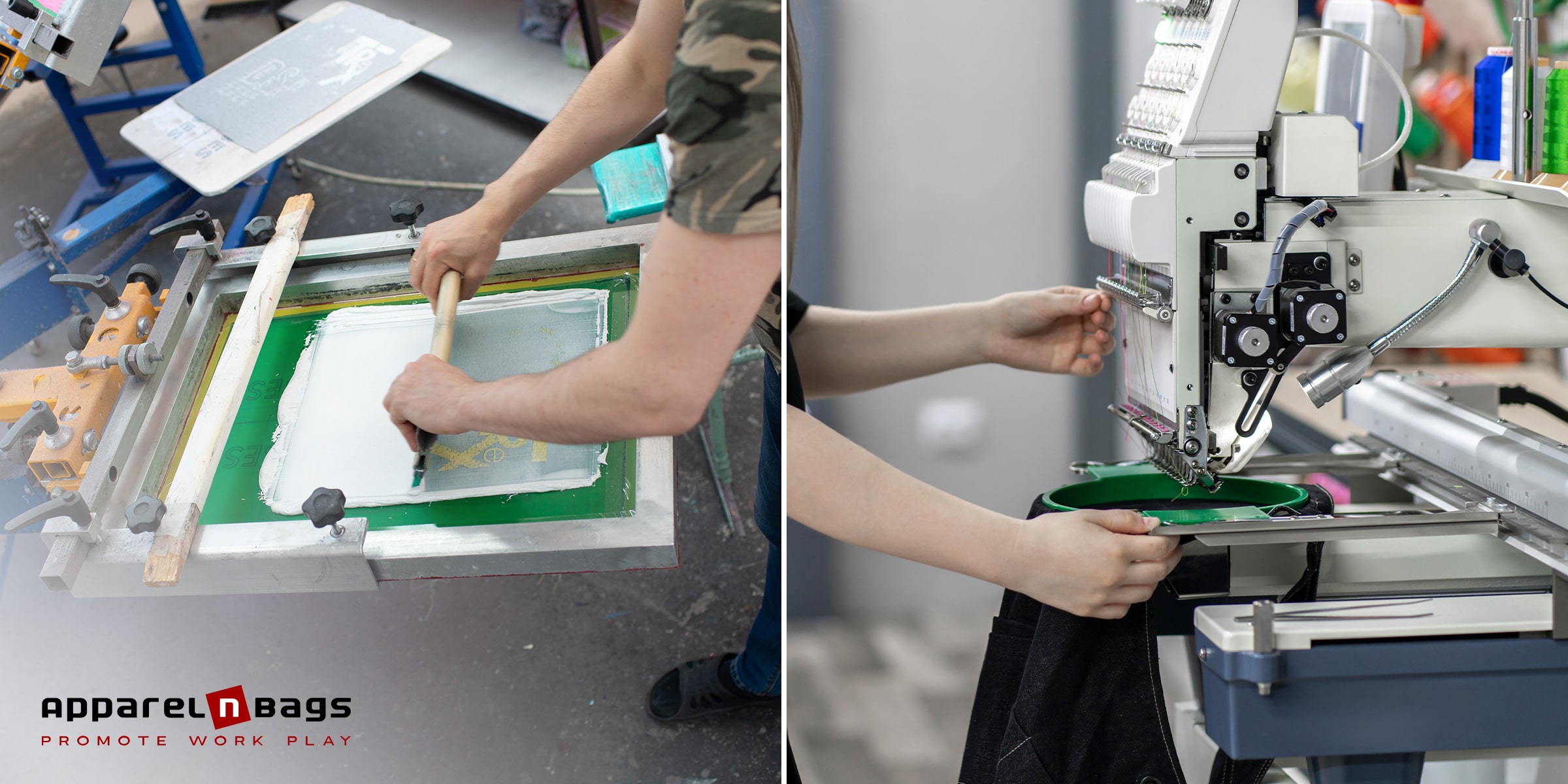
Choosing between screen printing and embroidery can be tough, even though screen printing is more commonly used. In simple terms, it all comes down to what you prefer and what you think your customers or team will prefer. Embroidery adds a unique and noticeable touch to your apparel and perfect for small orders. On the other hand, screen printing is best for small businesses looking to get custom apparel in bulk for their business promotions due to its reduced costs for larger orders.
Ultimately, it’s your decision. You can always try both methods to see which one suits your personal or business branding requirements. Both screen printing and embroidery have their strengths, so choosing the right one depends on your projects, goals, and budget constraints.
Embroidery vs Screen Printing FAQ’s