

The drinkware market is booming, and for good reasons. One of the main reasons is drinkware items like personalized mugs, tumblers, and custom bottles serve as the powerful branding tools for small to mid-size businesses to help attract and connect with customers. Studies show that 85% of consumers keep promotional products they find useful, and drinkware tops the list as one of the most retained and loved items.
From branded mugs that boost visibility to eco-friendly bottles that connect with sustainability-conscious buyers, custom drinkware offers a unique way to build loyalty, spark conversations, and stand out in a crowded market. These cost-effective and impactful promo items can help build brand recognition and boost customer loyalty. People tend to use these items regularly, whether at work, at home, or during travels and outdoor adventures. The more they see your company logo, the more likely they are to remember your brand, which can lead to increased customer loyalty and building new customers.
Read on this blog on “drinkware market analysis” to further learn about drinkware market size, drinkware market trends, future outlook and drinkware market forecast to make the best investment for your brand.
Drinkware Market Size
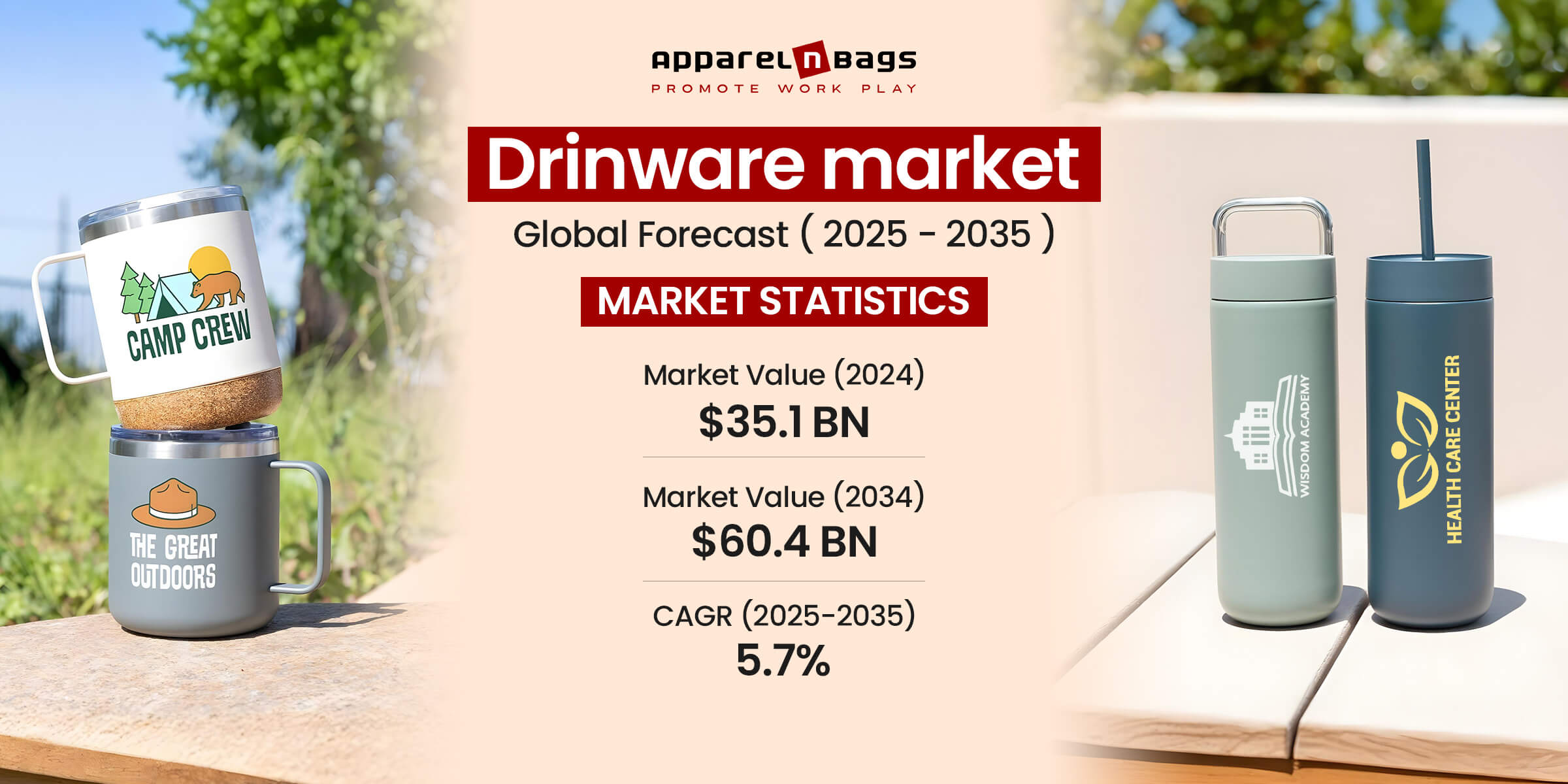
The drinkware market has seen remarkable growth in recent years, driven by increasing demand for personalized products. In 2024, the global drinkware market growth was valued at over USD 35.1 billion, with projections suggesting a compound annual growth rate (CAGR) of 5.7% from 2025 to 2030. This growth is fueled by the rising popularity of reusable drinkware, as both consumers and businesses prioritize sustainability and functionality. Custom drinkware, in particular, has become a key driver in constantly increasing drinkware market growth, with many small to mid-size businesses leveraging it as a promotional tool to boost visibility and customer loyalty.
The drinkware market growth is further accelerated by the shift toward reusable and durable products, especially in regions like North America and Europe, where environmental awareness is high. For instance, reusable water bottles and coffee tumblers have become a go-to product for eco-conscious consumers, with companies like H2Go, Contigo, Bubba leading the drinkware industry. Additionally, medical and corporate sectors are increasingly adopting custom drinkware for branding and marketing purposes, contributing significantly to market expansion. In the U.S. alone, there are over 62 thousand bars and nightclubs and the growing consumption of beverages in bars and nightclubs has further fueled the demand for drinkware.

Drinkware Market Segmentation
The drinkware market is segmented into various categories to cater to diverse consumer needs and preferences. These segments include product type, material, application, and distribution channel, each playing a vital role in shaping the drinkware industry. By understanding these segments, businesses can better target their offerings and meet the demands of their target audience.
Drinkware Market by Product Type
The drinkware market is divided into products like mugs, tumblers, water bottles, and glassware. Mugs are highly popular for both personal and marketing use, with ceramic mugs being a favorite for coffee lovers. Tumblers, especially insulated ones, are gaining popularity- especially among students and office going individuals – due to their versatility and ability to keep beverages hot or cold. Water bottles, particularly reusable ones, dominate the drinkware market as consumers prioritize making eco-conscious purchases. Glassware, such as beer and wine glasses, caters to niche markets, including the bars, nightclubs, and hospitality industry.
Drinkware Market by Material
Drinkware is made from a variety of materials, including stainless steel, glass, plastic, and ceramic. Stainless steel is the most sought-after material for reusable bottles and tumblers due to its durability and insulation properties. Glass is preferred for its aesthetic appeal often used in high-end drinkware products that are mainly used in parties or festive occasions, and other private and corporate events. Plastic remains popular for its affordability and lightweight nature, though its use is declining due to environmental concerns. Ceramic is widely used for mugs and teapots, offering a classic and elegant look while maintaining its quality over time.
Drinkware Market by Application
The drinkware market serves multiple applications, including household, commercial, and promotional use. Household drinkware is the largest segment, with consumers purchasing thousands of items for daily use. Commercial application is also increasing each passing day, with restaurants, cafes, and hotels often getting customized drinkware to reflect their brand identity. Promotional drinkware, such as branded mugs and customized bottles, are widely used by businesses for corporate giveaways, making it a growing segment ever.
Drinkware Market by Distribution Channel
Drinkware is sold through various channels, including online retail, offline stores, and direct sales. Online platforms like Amazon, Etsy, and ApparelnBags have seen a surge in drinkware sales due to affordable prices, highest quality, and wide product range. Offline stores, including supermarkets and specialty shops, remain popular for customers who prefer to see the product before purchasing. Direct sales, such as corporate bulk orders for custom drinkware, are also a significant contributor to the market.
Drinkware Market Trends
The drinkware market is observing significant growth, driven by evolving consumer preferences and innovative product offerings. One of the key trends is the rising demand for reusable and eco-friendly drinkware, as sustainability becomes a top priority for consumers. Brands are increasingly focusing on materials like stainless steel, bamboo, and glass to cater to environmentally conscious buyers. This shift is contributing to the drinkware market growth, which is projected to grow at a CAGR of 5.7% through 2030.
Another major trend is the surge in personalized drinkware. Businesses are acquiring custom mugs, tumblers, and bottles as part of their branding strategy, while consumers are drawn to unique designs that reflect their individuality. The growing popularity of drinkware such as tumblers which keeps beverages hot or cold for extended periods is also fueling market expansion. These trends, combined with the increasing adoption of online drinkware suppliers, are shaping the future of the drinkware industry.
Drinkware Market Share
The drinkware market is highly competitive, with key players like Yeti, Hydro Flask, and Owala dominating a significant share. Other brands like H2Go, Contigo, and Owala also come with drinkware that feature advanced elements such as insulated drinkware to meet and exceed customers’ demands. Together, these brands have successfully captured a substantial portion of the market and account for a notable percentage of the global drinkware market share, particularly in North America.
In addition, smaller brands and local manufacturers are also gaining traction by offering affordable and innovative drinkware options. As the market continues to expand, collaborations between brands and influencers, along with strategic campaigns, are helping companies strengthen their market presence and capture a larger share.
Drinkware Industry News
Recent developments in the drinkware industry highlight its dynamic nature and rapid growth. In 2023, Yeti announced the launch of a new line of customizable drinkware, targeting both individual consumers and corporate clients. This move aligns with the growing trend of personalization and is expected to further boost the company’s revenue. Similarly, Hydro Flask introduced a limited-edition collection made from recycled materials, reinforcing its commitment to sustainability and attracting eco-conscious buyers.
Additionally, the rise of direct-to-consumer (DTC) brands in the drinkware industry is reshaping the sector, with companies like Contigo and Owala gaining popularity for their innovative designs and targeted marketing strategies. These developments highlights the drinkware market’s potential for continued growth and innovation in coming years.

Regional Drinkware Market Analysis
The regional drinkware market in the United States has experienced steady growth, driven by rising consumer interest. Regionally, the West Coast and Northeast regions of the U.S. are leading the charge in adopting sustainable drinkware, driven by strong environmental awareness. States like California and New York are hotspots for eco-friendly drinkware products, with consumers actively seeking reusable alternatives to single-use plastics.
Meanwhile, the Midwest and Southern regions are catching up with growing interest in insulated drinkware for both personal and commercial use. The rise of online suppliers has also made it easier for consumers across the country to access a wide range of drinkware options and get them within the comfort of their home, further fueling drinkware market growth.
Future Outlook and Drinkware Market Forecast
The drinkware market is expected to grow more in the coming years, with the U.S. market alone projected to grow from USD 750.86 million in 2023 to USD 1,152.85 million by 2030. It reflects a compound annual growth rate (CAGR) of 6.32% during the forecasted period. This growth is driven by increasing consumer demand for reusable, eco-friendly, and innovative drinkware options; and, as sustainability becomes a top priority, brands are focusing on materials like stainless steel, glass, and biodegradable composites, meeting the demands of environmentally conscious buyers.
The rise of promotional drinkware is another key factor fueling market expansion. Businesses are making use of custom drinkware products as effective marketing tools to attract and retain customers. Additionally, the growing café culture, increasing number of bars and restaurants, and the popularity of outdoor activities and sports are factors contributing to the demand for high-quality drinkware globally.
Drinkware Market Analysis FAQ’s